Introduction
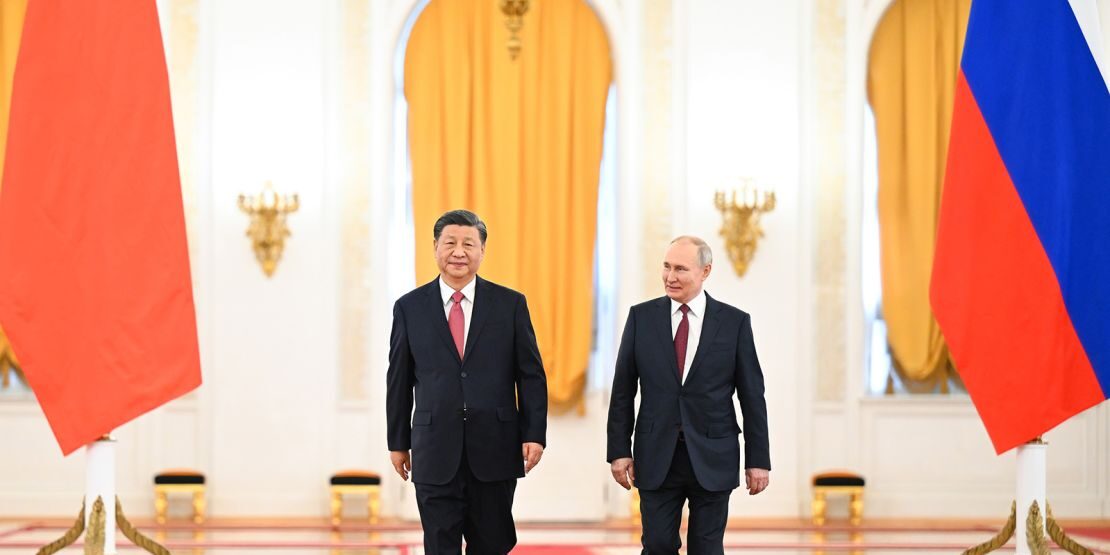
Russia and China have maintained a “comprehensive and strategic partnership of coordination” for more than a decade. It can be proved through their visit to each other’s states. Till now, Putin and Xi have met forty times, in which Putin has visited Beijing twenty times, and Xi has visited Moscow eleven times. Both allies have strong economic relations, too. In 2025, Russia’s total trade was US$700 billion, of which US$200 billion, or around 32 percent, was with China only. In between Putin’s visit to Beijing is economically and strategically very important. Putin arrived in Beijing on 19th May 2026, less than a week after US President Donald Trump concluded his three-day visit to China.
Context of the Visit
Russian President Vladimir Putin’s visit to China was not preplanned, though it was announced just after a day of Trump’s departure from Beijing. The most relevant thing about this visit is timing. Because two major countries visiting Moscow in less than a week is very rare and surprising too. Officially, the context and aim of this visit were to strengthen strategic ties, secure energy agreements, and demonstrate a united front against Western hegemony. Another occasion of Putin’s visit to China was the 25th anniversary of the “2001 Treaty of Good Neighborliness and Friendly Cooperation”. In a true sense, Putin’s Beijing visit was an instant reaction to Trump’s two-day visit to China. Through this meeting, Moscow wanted to recall their strategic alignment against Western dominance. Putin wanted Xi to think about their strategic ally before going ahead with President Trump and underlined their decade-old friendship with Beijing.
Takeaways of Putin’s Visit
Putin’s visit to Beijing was more productive than Trump’s visit in terms of agreements and joint statements. Trump’s visit seems ceremonial with no productive outcomes. Instead of that, during Putin’s visit, more than forty agreements were signed between Russia and China. Major agreements were signed in the fields of energy, technology, investment, transport, space, and cultural cooperation. During this visit, Xi and Putin, without taking names, criticized U.S. unilateral and hegemonic policies and also pledged to work for a multipolar global order and democratization of global institutions like the United Nations Security Council (UNSC). In the energy sector, the biggest highlight was the discussion on the proposed “Power of Siberia-2” pipeline, which will significantly increase Russian gas exports to China. Though the final agreement could not be signed.
So, Putin’s visit produced several important geopolitical, economic, and strategic outcomes. Through this visit, both countries demonstrated their strengthening partnership and also reflected broader changes in the international order. Putin’s visit shows a great concern regarding Trump’s visit and worry of losing its decade-old strategic and economic partner. This meeting carries geo-political symbolism to the West, which means Russia is still not in isolation despite Western sanctions. And from China’s perspective, major diplomatic engagements, hosting Putin after Trump, underline Beijing’s role as a central actor in global diplomacy, which is capable enough of engaging competing powers simultaneously.
Are Russia and China headed towards a Military Alliance?
Analysts are showing their concern regarding Russia-China defence and technology cooperation and calling it an upcoming military alliance. But in reality, Moscow and Beijing are not natural allies, meaning they have nothing in common, culture, ideology, political regime, and ethnicity; instead, their strategic cooperation is a win-win situation for both powers, and its main reason is that both seek Washington as their structural rival.
Military alliance comes with twin fear, these are: entrapment and abandonment. And both powers are familiar with these two. China is not ready for unwanted conflict and abandonment during a crisis, which Moscow is facing after the Ukrainian war. At the same time, Russia too does not want to get engaged with China’s conflict with the U.S. over Taiwan. The cooperation between the two and the immediate visit of Putin to Beijing also proves that they are not about to form any military alliance against the West.
Concern for India
Russia is considered India’s “time-tested friend” or “all-weather friend”. New Delhi enjoys special relations with Moscow, which are based on mutual trust and a glorious past during the war. That is why Putin’s visit to China has great implications for India. Security concerns are the biggest. Though Russia and China are sharing their technology and defence equipment, and in a crisis situation, this cooperation will work against India due to its huge defence import from Russia. Economically and strategically, the deepening relationship between Moscow and Beijing undermines New Delhi’s strategy to counter China in the South Asian region. The closeness between these two superpowerss undermines India’s importance in several multilateral forums like BRICS and SCO, and it can also affect India’s claim for permanent membership in the UNSC. The visit also demonstrates that for Moscow, Beijing is in first preference and India is second, which challenges India’s strategic options in the emerging global order.
Conclusion
Putin’s visit gained a lot of importance among scholars due to its timing and success. But in reality, Putin’s visit to Beijing not only underlines their friendship but may have changed Xi’s mind or thought process, which may have been influenced by Trump’s visit. And stopped Xi from bargaining with the U.S. on Russia’s behalf. The failure to sign an agreement regarding “Power of Siberia-2” between Xi and Putin underlines that economic asymmetry exists within the relationship. In economic level, Russia is finding urgent market diversification, and China maintains stronger bargaining leverage over pricing and implementation conditions.
The main concern for India is to deal with China’s power or influence within the region. New Delhi needs to think about the increasing influence of China in its neighboring countries. India cannot match China’s progress immediately because China has been developing since
Written by: Dr Reeta Kumari
Research Associate at Swadeshi Shodh Sansthan
Vertical: China Desk