In the conflict-ridden hills of northern Myanmar, some of the world’s most valuable minerals are being dug out using toxic chemicals and cheap labour. India wants a share. The problem is getting there.
By Prachi | May 2026
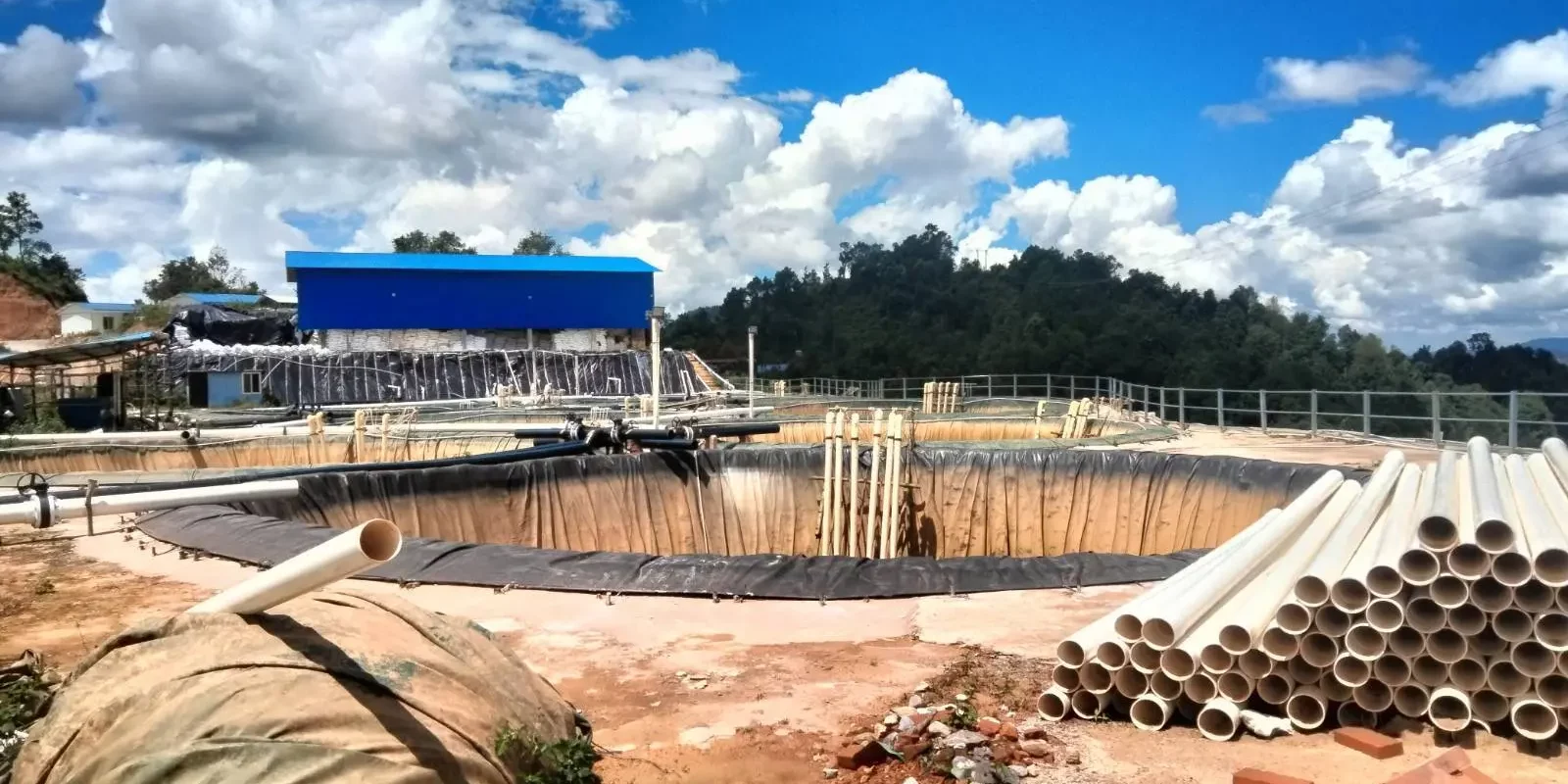
In the remote towns of Chipwi and Pangwa, tucked into the mountains of Myanmar’s Kachin State near the Chinese border, workers drill holes into hillsides and pour chemical solutions into them. The liquid dissolves metals from the clay beneath, flows down through collection pits, and settles into a thick mud at the bottom. That mud is then dried in kilns. What comes out looks unremarkable- a dull, chalky powder. But it is worth enormous amounts of money, and right now, three of the world’s biggest powers are fighting over who gets to buy it.
These are rare earth elements. You may not have heard the names: dysprosium, terbium, neodymium but you almost certainly use products that depend on them every day. They go into the motors of electric vehicles, the generators of wind turbines, the screens of smartphones, and the guidance systems of military missiles. Without them, most of the technology the world is banking on for its clean energy future simply does not work.
And Myanmar happens to sit on a massive deposit of them.
How Myanmar Became the World’s Third Biggest Producer
This did not happen through careful planning. It happened because of war.
Myanmar has become the world’s third-largest producer of rare earth elements behind China and the US, with total production estimated at around 31,000 metric tons in 2024, up from about 12,000 metric tons in 2022. That near-tripling in just two years is directly linked to the military coup of February 2021, which threw the country into civil war and created a chaotic, lawless environment where mining expanded unchecked.
According to ISP-Myanmar, the number of active mining sites rose from about 130 in 2020 to over 370 by the end of 2024. In Chipwi alone, more than 2,500 leaching pits have been recorded.
The majority of rare earth mining sites are concentrated around Chipwe and Pangwa, approximately 125 km northeast of Myitkyina, the capital of Kachin. Additional mining activity also occurs in Nhkawng Pa, a mountainous area in the state’s Bhamo district, which borders China.
The mining method used here is fast and damaging. Miners pour ammonium nitrate or sulphate solutions down a mountain from drilled top holes. The charged fluid dissolves metals from the ore and emerges in collection ponds below the hill. This sludge has high water content and is burned off in kilns to retrieve the minerals. The process can be implemented relatively quickly, but is considered highly polluting. Farmland has been destroyed. Streams have been poisoned. Many locals are suffering from skin and kidney issues as a result of the contamination. This is the grim reality on the ground — the green energy transition is being fuelled, in part, by one of the dirtiest supply chains in the world.
The Group That Controls the Mines
To understand who is selling these minerals, you need to know about the Kachin Independence Army, or KIA.
The KIA, founded in 1961, is one of Myanmar’s most influential armed groups. It has been fighting the Myanmar state, on and off, for over sixty years, seeking autonomy for the Kachin people in the country’s north. After the 2021 coup, the civil war intensified across Myanmar, and the KIA used the opportunity to go on the offensive.
In October 2024, the Kachin Independence Army seized control of Chipwi and Pangwa, two towns at the center of one of the world’s most valuable concentrations of heavy rare earth elements. This changed everything. Overnight, a rebel army that most of the outside world had never heard of became the gatekeeper of a global supply chain worth billions of dollars.
China, which had been buying essentially all the ore coming out of these mountains, was not happy. China responded by closing border gates along the Yunnan corridor, halting rare earth shipments from Myanmar. It was only in December 2024, after a discreet meeting in Kunming between KIA representatives and members of the Chinese People’s Political Consultative Conference, that momentum shifted. A new taxation regime was introduced, with the KIA imposing a 20 percent levy on exported rare earth concentrates. By April 2025, both sides agreed on a fixed rate of 35,000 yuan (USD 4,830) per metric ton.
A rebel group in the jungle had forced China to sit down, negotiate, and accept a price it had no choice but to pay. That tells you everything about how important these mines are.
Where India Comes In
India has watched all of this with growing anxiety and ambition.
Approximately 80 percent of India’s rare earth import value comes from China. That dependence became a crisis in April 2025 when Beijing announced export controls on rare earths and rare earth magnets, partly in response to the US-China trade war under Trump. Industries across India; from automakers to defence manufacturers were suddenly facing a supply problem they had no quick solution to.
India imports nearly 90% of its rare earth magnets from China. In the fiscal year ending March 2025, that amounted to over 53,000 metric tons. India’s own domestic rare earth production is well below 3,000 tons a year, mostly from light rare earths in coastal sand deposits in Kerala and Tamil Nadu. The heavy rare earths; the ones needed for high-performance magnets are a different matter entirely, and India has almost no capacity to process them.
So New Delhi turned to Myanmar.
The Indian Ministry of Mines tasked Indian Rare Earths Ltd (IREL), a Mumbai-based public sector enterprise, and Hyderabad’s Midwest Advanced Materials Pvt Ltd, with assessing the viability of sourcing and transporting rare earth samples from the mining sites in Kachin, which are currently under the control of the KIA.
IREL is India’s main state-owned rare earth company, operating under the Department of Atomic Energy. It has decades of experience with light rare earths from beach sand deposits along India’s coastline, but has never worked with the heavy rare earths found in Myanmar. Midwest Advanced Materials is a Hyderabad-based private company that recently received government funding to develop rare earth magnet manufacturing, making it a key player in India’s push to build a domestic supply chain.
In July 2025, a government-led initiative helped coordinate the transfer of rare earth samples for verification in Indian laboratories, with the KIA actively gathering and preparing samples. A KIA official confirmed publicly that the group had started collecting samples and was evaluating whether bulk exports to India were feasible.
The Route and Why It’s the Biggest Problem
Here is where the plan runs into serious trouble.
The ore currently moves from the Chipwi-Pangwa mining belt eastward, across the border into China’s Yunnan province. For years, ores from these mountains were trucked across border crossings at Pangwa and Kan Paik Ti into Yunnan. That route is short, relatively simple, and uses established roads that Chinese companies helped build. The trip from mine to Chinese refinery is a matter of hours.
The route to India is the opposite. The Kachin deposits lie much closer to China’s Yunnan Province than to India’s Manipur or Nagaland. The old Myitkyina-Assam road is mainly unusable for heavy transport, while the southern route through Sagaing to the Tamu-Moreh crossing in Manipur cuts through zones of active fighting.
Any westward corridor carrying ore from Chipwi-Pangwa to India would need to pass through Myitkyina, then cut across the conflict-torn Sagaing region, before eventually reaching the Indian border either at Moreh in Manipur, or further south via the Kaladan corridor in Mizoram. Every stretch of that journey passes through areas where either the Myanmar military, the KIA, or other armed groups are fighting.
The Jiribam-Imphal rail link in Manipur is expected to become operational by March 2028, while its extension to Moreh is currently only at the planning stage. There is also the historic Stilwell Road, the World War II-era highway linking Assam to Kachin but India has not committed to reviving it, and large sections have been swallowed by jungle.
The terrain is mountainous, lacks all-weather roads, and routes to the sea run through conflict zones. Getting heavy loads of ore concentrate out of a landlocked, war-zone region to an Indian port is not a logistics challenge; it is several logistics challenges stacked on top of each other.
Delhi’s Dual Game
Despite the obstacles, India is not going in blind. It is playing two tracks at once.
Delhi has maintained talks with Myanmar’s military to preserve its interests, since any large-volume commercial supply would require transit or regulatory cooperation through centrally governed regions. This dual-track engagement strategy shows India’s willingness to balance geopolitical risks and opportunities. In other words: India is talking to the rebels who control the mines, and to the military government that controls the roads between the mines and the Indian border.
This is not unusual for India in Myanmar. When the KIA’s advances disrupted its interests elsewhere, Indian security agencies coordinated with the ethnic armed organization known as the Arakan Army to secure borders and the Kaladan transport corridor. Working with non-state armed groups when it serves a strategic purpose is something India has done before, even if it rarely advertises it.
Still, the challenges are real. India lacks facilities to process dysprosium and terbium, and neither IREL nor Midwest Advanced Materials currently works with them. Developing separation plants and magnet production lines will require significant capital and years of lead time, even with assistance from Japan or South Korea. And rare earth mining in Kachin’s Chipwi and Pangwa townships is still primarily operated by Chinese companies, with the extracted minerals exported to China, according to mining workers in the region. Even if India negotiates access to the ore, much of the technical expertise on the ground remains Chinese. No formal supply contracts have been signed or announced.
So Where Does This Leave Things?
The honest answer is: in an early, uncertain, but strategically important place.
India has identified a real problem: its dependence on China for critical minerals is a national security risk. It has found a potential solution- the KIA-controlled mines in Kachin. And it has taken initial steps, tasking IREL and Midwest to assess samples and opening discussions with the KIA.
But the road from ‘we’ve identified the opportunity’ to ‘ore is moving across the border into India’ passes through an active war zone, requires infrastructure that does not exist yet, depends on a rebel army maintaining control of territory the Myanmar military is trying to recapture, and demands refining capacity India does not currently have.
With China controlling over 90% of global rare earth mineral processing and tightening exports of processed rare earths, it is crucial for India to pursue its goal of securing critical minerals for clean energy, technology and defence sectors. That urgency is real, and it is driving New Delhi to take risks it would not normally take.
Whether those risks pay off will depend on what happens in the mountains of Kachin , where the men are still pouring chemicals into hillsides, and the mud at the bottom is still worth more than anyone who lives nearby will ever see.
References
The Diplomat. (2025, September 25). India’s Myanmar minerals gamble: Rare earths, rebels, and the China challenge. The Diplomat.
The Federal. (2025, September 21). Myanmar ground reality hits India’s plans to tap rare earth minerals. The Federal.
Pacific Forum. (2025, November 24). PacNet #100 – Kachin’s rare earths. Pacific Forum (CSIS).
Stimson Center. (2025, June 24). Rare earths and realpolitik: Future of mediation, Myanmar. Stimson Center.
East Asia Forum. (2025, October 4). Myanmar’s rare earth gold rush is fool’s gold. East Asia Forum.
Mining.com. (2025, September 11). India explores rare earth supply deal with Myanmar rebel group. Mining.com/Reuters.
Manohar Parrikar Institute for Defence Studies and Analyses. (2025, July 30). Myanmar’s rare earth elements: Conflict dynamics and supply chains. MP-IDSA.
Asia Times. (2025, November 28). Great game intensifies for Myanmar’s Kachin rare earths. Asia Times.
Karen News. (2025, December 17). KIO denies reports of secret rare earth mining deal with India. Karen News.
Chiang Rai Times. (2025, September 10). India seeks rare earth minerals in Myanmar’s rebel-held regions. Chiang Rai Times/Reuters.