
Talk on China’s Cognitive Warfare Scan: Implications & Strategic Response
Date: 30 June 2026
Time: 3:30 PM – 5:00 PM
Organized by: Swadeshi Shodh Sansthan, Delhi Chapter, Invincible Defence Structure Vertical.
The Swadeshi Shodh Sansthan (Delhi Chapter) Invincible Defence Structure Vertical
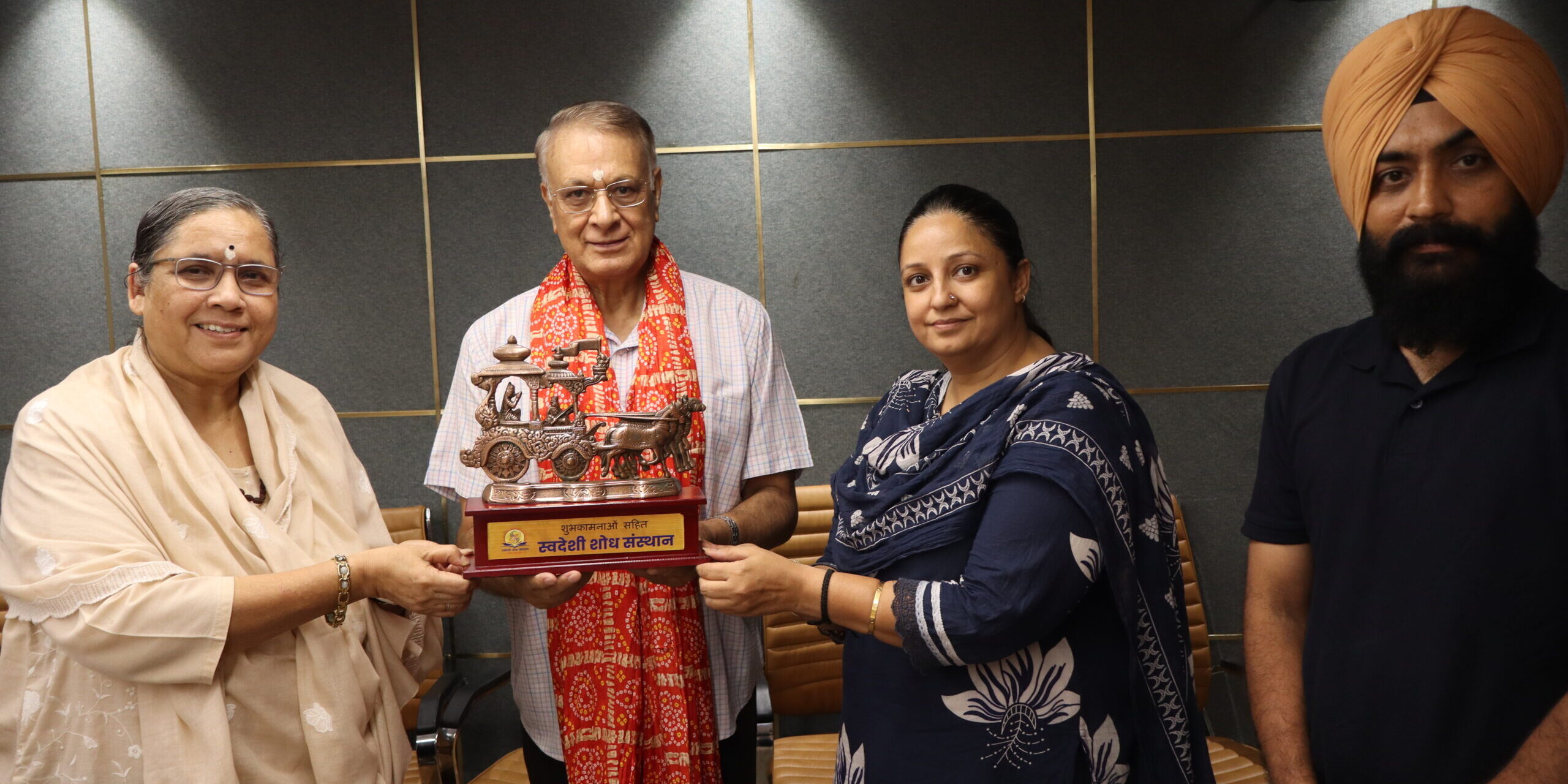
hosted a significant seminar focusing on the emerging challenges of “Mind Warfare” and cognitive conflict. The event featured Major General B.K. Sharma (Retd.), a distinguished military veteran and former Director General of the United Service Institution of India (USI), as the keynote speaker. The program commenced with a traditional lamp-lighting ceremony (Deep Prajwalan), symbolizing the pursuit of knowledge and wisdom.

Presence of Organizational Leadership
- Dr. Sarbjeet Kaur (All India Secretary, Swadeshi Shodh Sansthan) and Shri Ankit Sharma, Organising Secretary of Swadeshi Shodh Sansthan, as a primary leader of the think tank, officially welcomed the attendees and provided a detailed introduction to the Swadeshi Shodh Sansthan. explained that the institution operates as a think tank focused on the “Viksit Bharat 2047” vision.
- Prof. Nandini Sinha Kapur (Delhi Chapter Secretary): Prof. Nandini was invited to participate in the traditional welcome and the presentation of mementos to the keynote speaker, Major General B.K. during the opening ceremony. Sharma.
- Prof. Rajinder Singh (Core Team Member): A prominent member of the core team, Dr. Rajinder was requested to present the guest of honor with a “vastra” (traditional cloth) as a mark of respect during the introductory session.
- Shi Jasbir (Joint Secretary of Delhi Chapter): Identified as a core team member (referred to as Jasbir Bhai Sahab), he was formally welcomed and recognized for his presence and contribution to the organizing team.
- Shri Rajesh Gautam (Seminar Convener): He served as the moderator and convener for the session.
Keynote Address: Cognitive Warfare
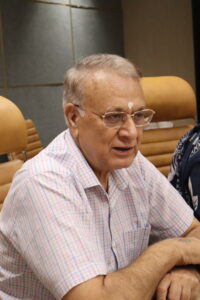
Major General B.K. Sharma (Retd.) highlighted that modern conflict has shifted from physical battlefields to Cognitive Warfare, or “Mind Warfare,” where the primary target is the human nervous system and decision-making processes. He emphasized that in this digital age, every citizen is both a potential target and a participant in national security.
The Nature of Cognitive Warfare
- OODA Loop Disruption: Cognitive warfare aims to corrupt the “Observe, Orient, Decide, and Act” loop. By feeding false information through digital means, an adversary creates “decision paralysis,” making a nation’s response ineffective.
- Narrative Dominance: The goal is to weaken a nation’s “organic cohesiveness” by exploiting internal fault lines, such as differences between political parties, religions (Hindu-Muslim), or military branches.
- Beyond Kinetic War: Unlike traditional war, cognitive operations happen before, during, and after physical conflict. They operate in the “Grey Zone,” where actions are ambiguous and remain below the threshold of open war.
China as the “Past Master”
General Sharma identified China as India’s long-term strategic competitor and a master of cognitive operations.
- Philosophical Roots: China’s strategy is rooted in ancient philosophies like Sun Tzu’s concept of “subduing the enemy without fighting” and the “36 Stratagems,” such as “killing with a borrowed sword” (using Pakistan to target India).
- The Chinese Ecosystem: China has a highly lubricated system for mind dominance, including a Propaganda Department, the United Front Work Department for overseas influence, and the Cyber Space Affairs Commission.
- Technological Weaponization: They use AI, “Bot Armies,” Big Data, and “Synthetic Reality” (metaverse) to manufacture outrage and create “perception bubbles” for foreign audiences.
- Internal Control: Within China, the “Great Firewall” controls information flow, while the “Social Credit System” monitors citizens 24/7 to ensure loyalty to the Party.
Regional Impact and Social Re-engineering
- Tibet: China is conducting social re-engineering by moving nomads into gated colonies, controlling monasteries, and making “Universal Education” in Chinese mandatory for children.
- India’s Neighborhood: China uses infrastructure (Belt and Road Initiative) and digital education to create an “India Out” sentiment in countries like Maldives and Bangladesh.
- Himalayan Belt: Sharma expressed concern over demonstrations in Ladakh and violence in Manipur, noting that adversaries exploit these internal grievances to create a sense of insecurity and “social despondency”.
India’s Gaps and the “5S Framework”
General Sharma noted that India lacks a single overarching authority to coordinate cognitive defense. To address this, he proposed the “5S Framework”:
- Structure: Creating a top-level institutional architecture and a National Cognitive Authority.
- Story: Developing a plausible, fact-based national narrative for the world to believe.
- Shield: Building defensive capabilities to counter adverse propaganda from China and Pakistan.
- Spear: Developing offensive cognitive warfare capabilities.
- Skills: Investing in specialized cadres trained in behavioral sciences, languages, and digital technology.
He concluded that India must move away from a reactive stance and establish a Rapid Response capability to activate counter-narratives and algorithms within 30 minutes of a threat being detected.
Interactive Q&A Session
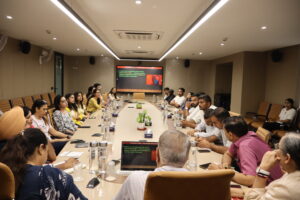
The seminar concluded with an engaging Q&A session where participants raised concerns regarding:
- Bangladesh: The strategic implications of China’s increasing footprint in Bangladeshi infrastructure and the need for India to leverage its geographical proximity.
- Ladakh and Manipur: The sensitivity of internal demonstrations and the risk of adversaries exploiting local grievances through “social re-engineering”.
- Border Infrastructure: The ongoing challenges of Chinese “forward pushing” and infrastructure development along the Line of Actual Control (LAC).
Conclusion:
The event emphasized that in the digital age, every citizen is a potential target and a participant in cognitive warfare. The seminar underscored the urgent need for a unified national approach to protect India’s “mindspace” and strategic autonomy