India’s Transition to an Industrial Economy in the “China+1” Era: Structural Bottlenecks, Localisation & MSME Integration

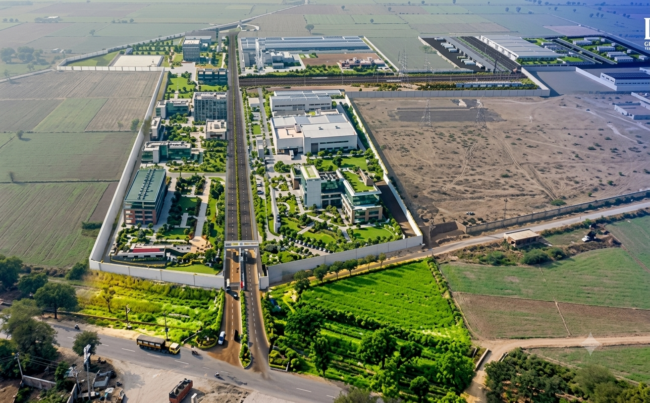
India’s Transition to an Industrial Economy in the “China+1” Era: Structural Bottlenecks, Localisation & MSME Integration   By- Kartik Shyam Mogha, Research Associate & Manya Bhati, Research Intern Swadeshi Shodh Sansthan   Throughout history, the locus of global production has continually shifted, fundamentally altering the balance of power and civilizational progress. For decades, the world…

The Strategic Importance of Bangladesh’s Mongla Port and China’s Expanding Role: Implications for India

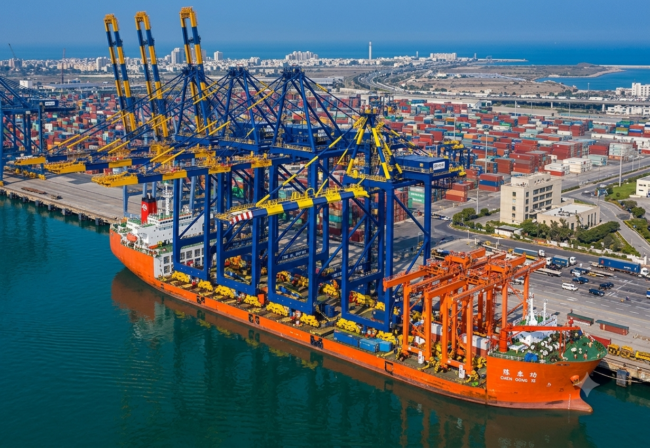
Introduction In Asian geopolitics, the growing Chinese presence in South Asian infrastructure is a defining feature of contemporary era. Dhaka’s government decision to give the modernization project of Mongla Port to Chinese firm illustrates strategic competition in the Bay of Bengal. Even though, under the Bangladesh’s national development agenda, this project is primarily presented as…

BRICS Delhi Summit: Bharat’s Civilisational Vision for Inclusive Global Growth

The 18th BRICS Summit in New Delhi on September 12-13, 2026, marks an important moment in the evolution of the emerging global order. Under Bharat’s presidency, the summit adopted the BRICS New Delhi Declaration, centred on “Building for Resilience, Innovation, Cooperation and Sustainability”. The declaration comes at a time when the international system is facing…

Cartographic Counter-Statecraft: India’s Arunachal Pradesh Mapping and China

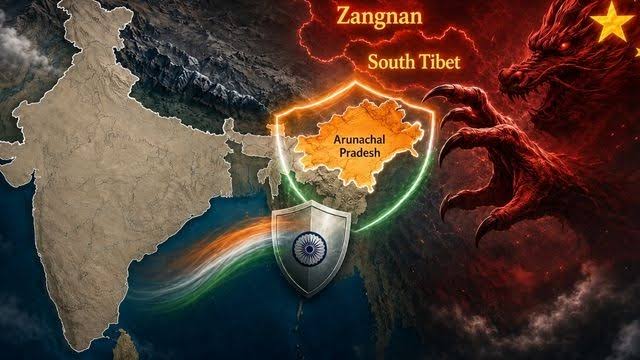
Cartographic Counter-Statecraft: India’s Arunachal Pradesh Mapping and China   Introduction Maps are not merely geographical representations; in contested territories, they can become instruments of sovereignty, state authority and geopolitical communication. By formally identifying 27 locations and geographical features within Arunachal Pradesh, New Delhi is reinforcing the administrative and territorial narrative that these areas form an…

Rethinking Collective Enterprise: History, Governance and the Future of India’s Cooperative Movement

Most business writing today celebrates the lone founder chasing profit. Cooperative Management: The Indian Perspective makes the opposite argument: that some of India’s most durable economic institutions are the ones nobody owns alone. Written by K.K. Tripathy, Harekrishna Misra and Sagar Kisan Wadkar, the book sets out to explain, in a single volume, how India’s…

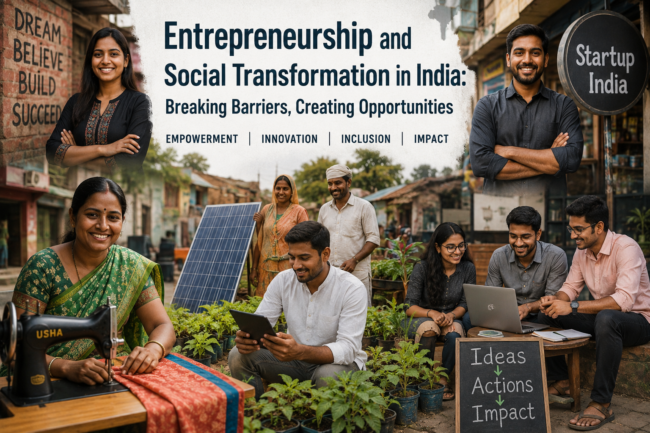
Entrepreneurship and Social Transformation in India: Breaking Barriers, Creating Opportunities

Abstract: The article aims to explore the co-dependent relationship between social barriers and entrepreneurship in India. Social inequalities based on caste, gender, class, religion, geography and educational status often limit access to capital, networks, skills, markets and even the dream of becoming an entrepreneur. Inclusive entrepreneurship can help to overcome these barriers by promoting economic…