Abstract
India’s policy for the Indo-Pacific has evolved significantly and emerged as a key tool in this strategy, namely defence diplomacy. Most of this essay is devoted to India’s growing reliance on military cooperation to foster security in a disputed region, safeguard its maritime interests and assert regional power. This article examines how the military shapes Indian power in peacetime in ways that don’t cause conflict or coercion through close working relationships, including the Malabar naval exercises, India-Vietnam naval diplomacy, and the Quadrilateral Security Dialogue (QUAD). The paper also covers some conceptual foundations of defence diplomacy, the strategic significance for the Indo-Pacific, and the possibilities and constraints on the part of India in utilizing defense diplomacy as an instrument for foreign policy.
Introduction
Defence diplomacy is a specialised form of traditional diplomacy, which has gained traction in contemporary international relations. As states are looking to project power without exercising force, military-to-military cooperation has emerged as the preferred way to establish trust, strengthen alliances and exert influence. As a facet of a wider foreign policy mentality, India an ever-detached non-aligned entity, has made strategic exception to answer to alliances and carpooling.
This is why the geopolitical and the economic are central to this strategy in the Indo-Pacific. utilization by India for freedom of rules-based naval order and the salient regional dynamics, and China’s rise-oppositional role to bootstrap it. A conceptual explanation, geographical background, case studies, effect analysis, difficulties, and policy recommendations are all included in the model.
Statement of the Problem
- How has India employed defence diplomacy as a strategic tool to strengthen its foreign policy objectives in the Indo-Pacific region?
- What role do military exercises and naval partnerships such as those with the QUAD, Vietnam, and the Malabar series play in enhancing India’s regional influence and security posture?
- What are the institutional, operational, and geopolitical challenges that constrain India’s defence diplomacy, and how can these be addressed to optimize its strategic impact?
Defence Diplomacy as a Foreign Policy Tool
Defence diplomacy is the use of military resources in constructive activities, such as training exchanges and joint exercises and technical cooperation, as a means to accomplish foreign policy objectives.
Unlike traditional diplomacy, it depends on military-to-military engagement to develop trust, enhance cooperation and deter threats in peacetime. Derived from Joseph Nye’s concept of “smart power,” it combines persuasion with strategic presence. (Nye, 2004)
Contributions to UN peacekeeping deployments, renewed engagement with major powers after 1998, and cooperation on tsunami relief with the United States, Japan, and Australia. An early antecedent of the QUAD, these have all contributed to the advancement of India’s defense diplomacy.
India’s position as a provider of net security in the Indian Ocean was also solidified in this period with coordinated patrols (CORPATs), training partnerships and de fence line-of-credit agreements.
In the Indo-Pacific, defence diplomacy allows India to equalise China’s assertiveness, improve harmony through exercises like Malabar, AUSINDEX, and JIMEX, and build strategic influence via capacity-building efforts such as delivering patrol boats to Vietnam.
These engagements have become a cornerstone of India’s foreign policy, not just enhancing military cooperation but also fostering regional stability and strategic alignment with like-minded democracies. By using defence diplomacy as a non-coercive tool, India projects itself as a responsible stakeholder committed to a rules-based order. It also builds long-term goodwill, strengthens deterrence, and promotes its vision of an inclusive Indo-Pacific.
Strategic Importance of the Indo-Pacific Region
Some of the world’s busiest sea lanes traverse the Indo-Pacific, linking the Middle East, Africa, South Asia and East Asia to global markets elsewhere.
Two-thirds of the world’s trade transits this area and it’s the security of the area is vital to the global economy. India’s maritime interest involves safeguarding its Exclusive Economic Zones (EEZs), ensuring security of supply chains, and militating against non-traditional security threats like piracy, trafficking, and terrorism.
The rise of Chinese influence in our neighbourhood, as evidenced by the Belt and Road Initiative and militarization of the South China Sea, has resulted in strategic recalibration by India and other like-minded nations.
India’s SAGAR (Security and Growth for All in the Region) doctrine highlights regional cooperation, inclusivity, and respect for sovereignty (Ministry of External Affairs, 2015). Defence diplomacy is integral to this strategy.
Case Study 1: India and the QUAD
The QUAD – India, US, Japan, Australia the Quadrilateral Security Dialogue (Quad) is a multilateral dialogue aimed at ensuring a free, open and inclusive Indo-Pacific region.
Though it is not an official military alliance, QUAD fosters strategic coordination via annual summits, dialogues and joint military drills.
India’s association is an indicator of non-alignment to issue-based alignment. The main priority topics are maritime security, cyber defence, counterterrorism, and humanitarian assistance.
Examples of Military Engagements under the QUAD:
Exercise Malabar (2020):
This was a landmark moment when Australia rejoined the Malabar naval drills, turning it into a complete QUAD-level naval engagement. The exercise was held in two phases: Phase 1 in the Bay of Bengal and Phase 2 in the Arabian Sea. It involved complex maritime operations such as anti-submarine warfare, air defence drills, and cross-deck helicopter operations, enhancing interoperability among the navies.
Exercise Sea Dragon (2021):
Conducted in Guam and led by the United States, this anti-submarine warfare (ASW) exercise included all four QUAD members. It tested the nations’ capabilities in submarine tracking, surveillance, and information sharing. Sea Dragon contributed to improving collective ASW readiness and reinforced the trust among QUAD navies.
Coordinated Patrols (CORPAT):
Beyond QUAD-centric exercises, India engages in regular bilateral naval patrols especially with Japan and Australia to enhance Maritime Domain Awareness (MDA) and secure sea lanes of communication. These CORPATs are non-provocative initiatives focused on tracking suspicious activities, curbing illegal fishing, and ensuring freedom of navigation.
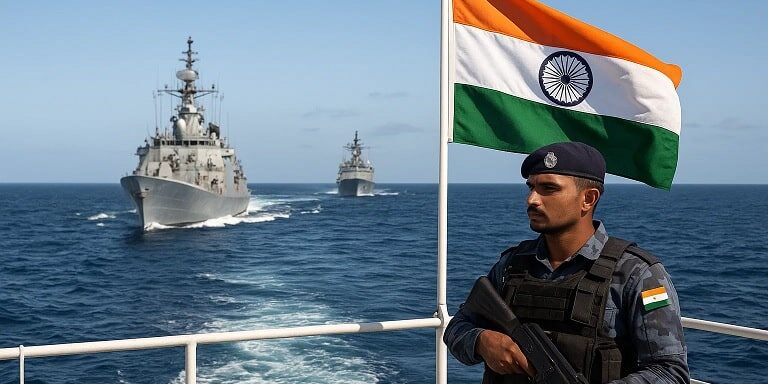
Military exercises like Malabar and Sea Dragon help QUAD countries build trust, improve interoperability, and signal unity in safeguarding the Indo-Pacific. They serve as a strong deterrent to unilateral aggression and reaffirm the collective resolve of major democracies to uphold freedom of navigation and rule-based order.
Case Study 2: Naval Diplomacy between India and Vietnam
Vietnam is one of the key partners in India’s Act East Policy. The two countries have common concerns over China’s actions in the South China Sea and mutual interest in maintaining the rule-based maritime order.
India’s naval diplomacy with Vietnam has training and exchange programs, submarine maintenance support, hydrographic cooperation and frequent port visits.
Examples:
INS Kiltan Deployment (October 2023):
In a symbolic and strategic move, the Indian Navy’s anti-submarine warfare corvette INS Kiltan visited Ho Chi Minh City during an overseas deployment in October 2023. This port call signified growing operational cooperation and India’s active naval presence in the South China Sea, an area of concern for both countries, vice-versa, China’s assertiveness.
SIMBEX-2022 (Observer Participation):
Though primarily an India-Singapore bilateral exercise, SIMBEX 2022 included Vietnam as an observer. This indirect engagement enabled Vietnam to understand India’s maritime exercise procedures, paving the way for future multilateral coordination and reinforcing trust in maritime security collaboration.
South China Sea PASSEX (Passing Exercise):
India and Vietnam conducted Passing Exercises (PASSEX) in the South China Sea, aimed at enhancing jointmanship and interoperability. These short-duration drills allow ships of friendly navies to practice communication and manoeuvring without prior planning, strengthening real-time cooperation and naval familiarity.
Patrol Boat Delivery (2021-2023):
Under a US$100 million Line of Credit, India delivered 12 high-speed patrol boats to Vietnam between 2021 and 2023. These vessels have significantly enhanced Vietnam’s coastal and maritime surveillance capabilities. India also extended technical support and maintenance, further deepening defence ties and showcasing itself as a reliable partner in regional capacity-building.
Joint drills such as PASSEX and regular port calls deepen tactical coordination and operational synergy between India and Vietnam. These exercises allow both navies to develop familiarity, share best practices, and strengthen maritime capabilities, especially vital in the contested South China Sea region.
Case Study 3: Malabar Naval Exercises
The Malabar naval exercise was initiated in 1992 as a joint bilateral exercise between India and the US. It now involves Japan and Australia, demonstrating increasing strategic convergence within the QUAD countries.
Malabar emphasizes aspects of high-end maritime operations, including anti-submarine warfare, carrier strike group tactics, and maritime interdiction.
Examples:
Malabar 2020:
This edition of Malabar was held in two phases first in the Bay of Bengal and then in the Arabian Sea. With the inclusion of Australia, it marked the first time that all four QUAD members participated in the exercise. Activities included surface warfare, anti-submarine operations, air defense drills, and joint maneuvering, all aimed at improving interoperability among the navies and reinforcing QUAD’s unity in the maritime domain.
Malabar 2021:
Held off the coast of Guam in the Western Pacific, this exercise represented a shift in the geographical scope of the QUAD’s maritime reach. It featured carrier strike group operations, live missile firing, and complex naval tactics, demonstrating the ability of the QUAD navies to operate cohesively in the broader Indo-Pacific theatre.
Malabar 2023:
Hosted for the first time by Australia in Sydney, this edition incorporated high-end warfighting operations, including simulated combat scenarios and advanced maritime interdiction tactics. It symbolized not only operational depth but also the growing institutionalization of QUAD as a security mechanism in the Indo-Pacific.
Malabar enhances India’s ability to operate alongside major powers in complex naval environments. It boosts combat readiness, reinforces regional partnerships, and projects India’s naval presence as part of a broader strategy to maintain security and balance in the Indo-Pacific maritime commons.
How Defence Diplomacy Enhances India’s Indo-Pacific Strategy
Defence diplomacy has helped India increase its role and influence in the Indo-Pacific region. By working closely with other countries through joint exercises, training, and cooperation, India builds trust and strengthens security ties. These efforts also improve coordination with partners and demonstrate India as a reliable and peaceful power in the region. These engagements serve multiple objectives:
- Enhancing regional influence:
By actively participating in multilateral forums and bilateral initiatives, India positions itself as a key stakeholder. Engagements with ASEAN, the QUAD, and Indian Ocean regional actors reflect India’s willingness to shape regional norms and contribute to maritime stability. This strengthens its image as a leader in the Indo-Pacific order.
- Strengthening deterrence:
Military cooperation enhances India’s readiness and sends signals of resolve to adversaries. Regular joint drills, port visits, and high-level defence dialogues bolster India’s ability to respond to crises and assert strategic autonomy in the face of coercive behaviour, especially from China.
- Improving interoperability:
Joint exercises and officer exchanges promote shared doctrines and smooth joint operations. These activities enable seamless coordination during humanitarian missions, combat scenarios, and maritime patrols, thereby improving India’s operational effectiveness in coalition settings.
- Building maritime awareness:
Surveillance cooperation, joint patrols, and information sharing enhance India’s situational awareness. This allows India to better monitor sea lanes, detect threats such as piracy or illegal fishing, and safeguard its Exclusive Economic Zones (EEZs) and shipping routes.
- Reinforcing soft power:
Defence diplomacy complements India’s cultural and developmental outreach, promoting its image as a responsible power. Training programs for foreign officers, naval aid, and disaster relief missions contribute to India’s goodwill and diplomatic capital in the region.
Defence diplomacy serves as a force multiplier in India’s Indo-Pacific strategy, blending hard security with diplomatic engagement to advance national interests.
Challenges and Constraints
Despite its growing significance, India’s defence diplomacy continues to face a range of strategic, institutional, and operational challenges that limit its full potential (Bhatia, Chaudhari, & Singh, 2016):
- Institutional Disconnects:
A persistent lack of synergy between the Ministry of External Affairs (MEA) and the Ministry of Defence (MoD) results in fragmented planning and inconsistent policy implementation. Defence diplomacy initiatives often lack unified direction due to overlapping jurisdictions, leading to delays in decision-making. The absence of a joint strategy hampers India’s ability to act swiftly and cohesively in a fast-evolving regional environment.
- Bureaucratic Inertia:
Defence diplomacy proposals frequently get caught in long, multi-layered approval chains. The absence of a single nodal agency to coordinate international military cooperation leads to operational bottlenecks. Limited delegation of authority and over-centralisation discourage proactive initiatives from field-level units and embassies, resulting in missed opportunities for timely collaboration.
- Geopolitical Sensitivity:
India must strike a delicate balance between expanding defence ties and maintaining strategic autonomy. Closer defence cooperation with QUAD or Western allies may be viewed with suspicion by ASEAN nations or provoke countermeasures from China. Additionally, overly assertive posturing may undermine India’s emphasis on inclusivity and respect for sovereignty, which are central to its SAGAR doctrine.
- Defence Industrial Limitations:
India’s indigenous defence manufacturing sector remains underdeveloped compared to global standards. Delays in production, lack of cutting-edge technologies, and dependency on foreign imports limit India’s capacity to offer consistent material assistance or joint development projects to partner countries. These industrial gaps also reduce India’s attractiveness as a long-term security collaborator.
- Budgetary Constraints:
Defence diplomacy requires consistent funding for training programs, officer exchanges, naval deployments, and capacity-building efforts. However, financial allocations for such activities are often ad hoc and secondary to conventional defence spending. Without dedicated budget lines and long-term funding assurances, India’s initiatives remain episodic rather than institutionalized.
- Capacity Gaps:
The shortage of trained defence attachés, language experts, and international engagement specialists constrains India’s ability to sustain active defence diplomacy. Furthermore, limitations in logistic infrastructure such as port facilities, airlift capability, and satellite communications impede the scalability of cooperative military initiatives.
Conclusion and Policy Recommendations
India’s growing use of defence diplomacy in the Indo-Pacific marks a significant strategic shift from passive non-alignment to proactive regional engagement. This transformation reflects a maturing foreign policy approach that prioritizes collaboration, capacity-building, and strategic signalling over isolation. Through multilateral platforms like the QUAD, bilateral initiatives with key regional players like Vietnam, and high-impact exercises such as Malabar, India has built trust and projected strength without resorting to coercion.
These efforts have helped bolster India’s image as a responsible and credible regional power, while also enhancing maritime domain awareness, operational readiness, and regional stability. Defence diplomacy now serves not only as a deterrent to aggressive postures in the Indo-Pacific but also as a tool to advance India’s strategic interests through peaceful means.
However, despite these promising developments, India’s defence diplomacy is yet to reach its full potential. Key challenges such as fragmented institutional mechanisms, underdeveloped defence manufacturing, and limited budgetary prioritization continue to hinder the scope and speed of India’s engagements. A lack of coordination between the Ministry of External Affairs (MEA) and Ministry of Defence (MoD) further exacerbates policy disjunctions, limiting India’s ability to respond swiftly to regional shifts.
To overcome these barriers and institutionalize defence diplomacy as a cornerstone of its Indo-Pacific strategy, India must invest in targeted structural reforms, capacity enhancement, and coherent policy planning.
Recommendations:
- Establish a centralised Defence Diplomacy Division within the MoD with dedicated staffing and resources. A specialised division would streamline planning, coordination, and execution of defence cooperation initiatives. It can act as a nodal point for international military engagement and ensure continuity in strategic partnerships.
- Align MEA and MoD priorities through joint policy planning.
Enhanced inter-ministerial coordination will reduce institutional silos and ensure India’s defence diplomacy aligns with broader foreign policy goals. Joint task forces or liaison units can facilitate synchronized decision-making.
- Increase budgetary allocation for defence cooperation, training, and capacity-building programs.
A stable and dedicated budget would enable India to scale up joint exercises, offer training scholarships, and support partner militaries with equipment and infrastructure assistance, especially in the Indian Ocean Region and Southeast Asia.
- Promote regional defence training hubs in India to attract foreign personnel.
Setting up regional military academies or naval training centres would boost India’s soft power and develop long-term security ties. It would also position India as a centre for professional military education in Asia and Africa.
- Institutionalise quick response mechanisms for bilateral requests.
Creating fast-track mechanisms for naval visits, training offers, and joint missions will enhance India’s responsiveness and credibility. Such agility is essential in HADR operations, emerging maritime threats, or when engaging smaller regional partners.
References / Bibliography
Bhatia, V., Chaudhari, V.S., & Singh, R. (2016). Defence Diplomacy and International Military Co-operation. Centre for Joint Warfare Studies (CENJOWS), New Delhi. https://cenjows.in/wp-content/uploads/2022/02/Defence_Diplimancy_Inside_Layout.pdf
Nye, J. S. (2004). Soft Power: The Means to Success in World Politics. PublicAffairs. https://www.belfercenter.org/sites/default/files/pantheon_files/files/publication/joe_nye_wielding_soft_power.pdf
Nye, J. S. (2011). The Future of Power. PublicAffairs. https://www.chathamhouse.org/sites/default/files/19290_100511nye.pdf
Ministry of External Affairs (India). (2015). India’s SAGAR Doctrine. https://www.researchgate.net/publication/380971035_SAGAR_POLICY_India’s_Doctrine_of_Maritime_Cooperation_in_the_Indian_Ocean_Region
Ministry of Defence (India). INS Kiltan Visits Ho Chi Minh City as Part of Eastern Fleet Deployment. Press Information Bureau. https://www.pib.gov.in/PressReleasePage.aspx?PRID=1683396
Ministry of Defence (India). (2020, November 3). Exercise Malabar 2020 Commences in Bay of Bengal. Press Information Bureau. https://www.pib.gov.in/Pressreleaseshare.aspx?PRID=1669481
Ministry of Defence (India). (2021, August 26). Indian Navy Participates in Exercise Sea Dragon in Guam. Press Information Bureau. https://www.pib.gov.in/PressReleasePage.aspx?PRID=1749126
Ministry of Defence (India). (2023, August 10). Malabar Exercise 2023 Commences in Sydney, Australia. Press Information Bureau. https://www.pib.gov.in/PressReleasePage.aspx?PRID=1947436
Ministry of External Affairs (India). (2021, December). India Delivers Patrol Boats to Vietnam under Line of Credit. Ministry Release.
Council for Strategic and International Studies. (2007). A Smarter, More Secure America: CSIS Commission on Smart Power.
https://csis-website-prod.s3.amazonaws.com/s3fs-public/legacy_files/files/media/csis/pubs/071106_csissmartpowerreport.pdf (Nye, 2004)
Muthanna, K. A. (2011). Military Diplomacy. Journal of Defence Studies, Vol. 5, No. 1. https://idsa.in/system/files/jds_5_1_kamuthanna.pdf
Indian Navy. (2022). SIMBEX Exercise Factsheet. [navy.gov.in] https://www.pib.gov.in/PressReleasePage.aspx?PRID=1871467
Observer Research Foundation (ORF). (2021). India’s Naval Diplomacy in Southeast Asia. https://www.orfonline.org/public/uploads/posts/pdf/20230723033805.pdf
By Leena, Ranit, and Swati.