Swadeshi Urja Evam Khad Aatmanirbharta Abhiyan
(Workshop on Indigenous Energy and Fertiliser Self-Reliance Mission)
Date: 2 July 2026 | Time: 10:00 AM to 5:30 PM
Venue: IIT Delhi
Organized by: Unnat Bharat Abhiyan, IIT Delhi, Swadeshi Shodh Sansthan, Uttar Pradesh Go Seva Commission, Biogas Forum India, Biogas Development and Training Centre (BDTC)
Agenda
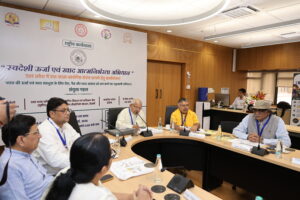
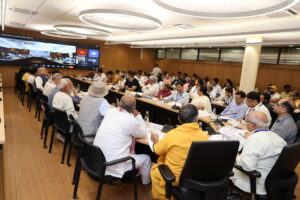
The workshop was convened to develop a roadmap for installing one lakh household biogas plants in Uttar Pradesh, with the vision of making the state a model for energy security, self-reliance, sustainable agriculture, and rural development. The discussions focused on identifying suitable biogas technologies, strengthening farmer engagement, and establishing effective long-term operation and maintenance support systems. The initiative aims to promote the use of biogas for clean energy and biofertilizer production, thereby reducing dependence on LPG, fossil fuels, and chemical fertilizers while improving soil health, supporting natural farming, and advancing circular economy practices. The workshop also emphasised collaboration among government agencies, research institutions, industry partners, cooperatives, Goshalas, Farmer Producer Organisations (FPOs), Krishi Vigyan Kendras (KVKs), NGOs, and farmers to create sustainable livelihoods through decentralised biogas systems and accelerate rural energy self-sufficiency.
Inaugural Session
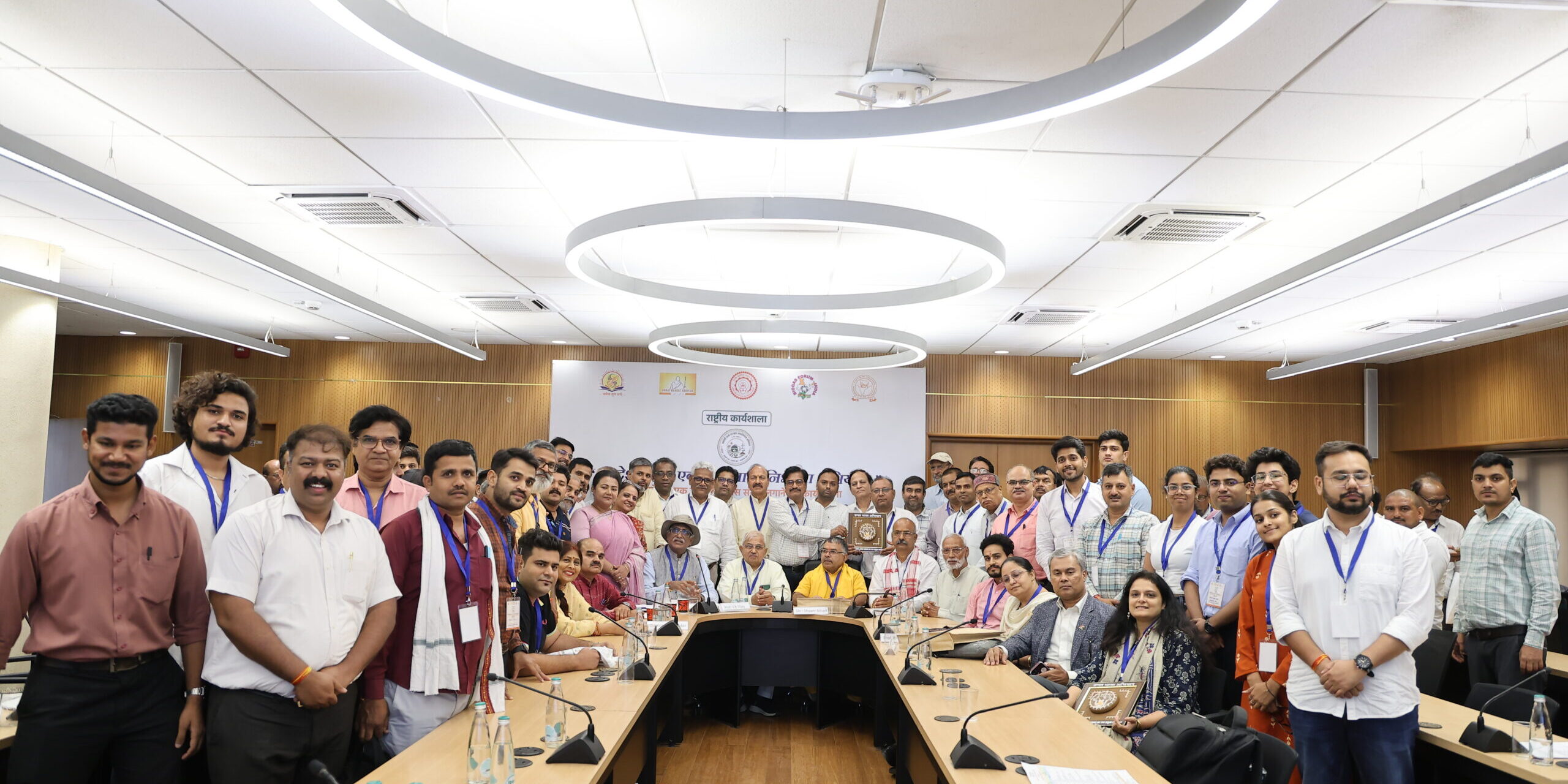
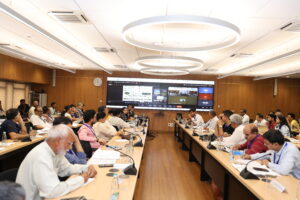
The inaugural session brought together eminent policymakers, researchers, academicians, government officials, industry representatives, and leaders from organizations working in the fields of renewable energy, sustainable agriculture, and rural development.
Prof. Arvind Kumar Nema
Deputy Director (Operations) at IIT Delhi
Shri Nema Ji opened the session by framing organic manure (khad) not just as an agricultural byproduct, but as a strategic substitute for imported fuel and urea. By positioning energy and fertiliser self-reliance (Aatmanirbharta) as complementary goals deeply rooted in India’s village economy, he provided the conceptual foundation for the discussions that followed.
Shri Satish Kumar Ji
All India Co-organizer of the Swadeshi Jagran Manch
Expanding on this economic imperative, Shri Satish Kumar Ji described biogas as a vital route to reducing India’s costly dependence on imported crude oil and chemical fertilizers. He emphasised the transformative potential of small-sized biogas plants in achieving localised energy security and strengthening village-level resilience. To drive this vision, he introduced the ‘Triveni Sangam’ Model, which deploys a game-changing trio: Small Biogas Plants + Organic Fertilizer + Carbon Credits. By integrating these elements, the framework introduces a forward-looking carbon-credit linkage designed to directly boost farmers’ income, sustainability, and self-reliance.
Prof. Virendra Kumar Vijay
National Coordinator, Unnat Bharat Abhiyan & Coordinator, Biogas Development and Training Centre, IIT Delhi
Prof. Virendra Kumar Vijay provided the essential historical and technical context, tracing India’s biogas journey from the earliest pioneering plants in the 1890s, through the subsidy-driven expansion sparked by the 1970s oil shock, to the critical post-1990 shift toward smaller, better-managed household units. He noted that contemporary designs must adapt to modern constraints such as changing human-to-animal ratios and shrinking land availability. Looking to the present geopolitical circumstances of the world, Prof. Vijay emphasized that there is an urgent need to become self-reliant in energy and fertilizer needs. Considering the immense potential of biogas energy and its slurry as manure, it can make our country self-reliant in both to a large extent
 .
.
Prof. Hoysala N. Chanakya
Former Chief Research Scientist at the Indian Institute of Science (IISc), Bengaluru
Prof. Chanakya detailed the mechanisms behind efficient biogas production technology. Reinforcing the technical viability of decentralized units, he explained that the true value of these systems lies in a direct circular-economy logic: linking clean energy generation with high-quality bio-fertilizer derived from cattle by-products. He emphasized that this integrated approach is essential for achieving sustainable agriculture and energy security. By efficiently converting organic waste into both renewable fuel and nutrient-rich organic manure, this model minimizes waste, recycles valuable resources, and directly reduces dependence on costly chemical fertilizers and fossil fuels.
Shri Shyam Bihari
Chairman, Uttar Pradesh Go Seva Aayog
Shri Shyam Bihari Ji, highlighted the importance of cattle-based farming systems and advocated the use of biogas slurry as a natural alternative to chemical fertilizers. Moving from the technical mechanics to environmental impact, he made a passionate call for pesticide-free farming supported by biogas-based manure. He directly linked the wider adoption of biogas technology to vital ecological benefits, including soil-carbon restoration, water conservation, and the protection of native earthworm species.
Dr. Murli Manohar Joshi
Former Union Minister, Government of India
Dr. Joshi through his message acknowledged IIT Delhi’s efforts in advancing biogas research and appreciated bringing researchers, policymakers, industries, and practitioners together on a common platform. Situating the biogas movement within India’s broader energy-security challenge, he pointed out that existing conventional and renewable sources including coal, crude oil, LPG, and wind remain insufficient to meet the nation’s growing demands on their own. He noted that India has immense potential to utilize its domestic livestock resources for renewable energy, emphasizing that a strong focus on Swadeshi self-reliance, continued scientific research, and technological innovation will strengthen the country’s independent energy security and sustainable development.
Prof. P.K. Singh
Project Advisor of Unnat Bharat Abhiyan at IIT Delhi
Prof. Singh offered sincere appreciation to all dignitaries, experts, industry representatives, and participants for their valuable contributions. He acknowledged the collaborative efforts of Swadeshi Jagran Manch, IIT Delhi, and the Uttar Pradesh Go Seva Commission in developing a roadmap to promote decentralized biogas systems. In his closing remarks, he extended his sincere gratitude to Miracle for sponsoring the workshop and supporting the execution of this vision, and while urging the audience to view biogas technology not merely as an energy intervention, but as a compassionate, holistic tool to address broader rural distress.
Technical Session I- Discussion Session with Biogas Installation Companies
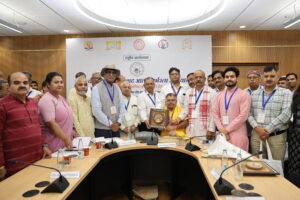
This session highlighted diverse biogas technologies deployed across India, demonstrating how commercial innovation meets the practical needs of the rural economy. Opening the session, Shri Mahesh Maheshwari Ji from Miracle AgriGreen introduced their flexi biogas plants, which are designed for small household and goshala installations to generate liquid bio-fertilizer. To reduce farm labour and streamline operations, these units feature an integrated motorized mud pump to mechanize slurry handling. Shifting the focus to alternative permanent structures, Shri Faizan Turk Ji of International Biogas Enterprises highlighted underground biogas digesters that efficiently process cattle waste and domestic sewage for farmers with available land, noting the company’s strategic role as a nodal agency partner for the Uttar Pradesh Government. From an adoption standpoint, Shri Ratnesh Tiwari Ji of Koshish India emphasized promoting biogas primarily as a biofertilizer rather than just an LPG substitute to align with farmers’ agricultural priorities, urging the strategic involvement of KVKs, FPOs, and gaushalas for field validation and robust service networks.
The manufacturing sector’s role in scaling these solutions was further outlined by Shri Vaibhav Matkar Ji from Sintex Limited, who discussed their prefabricated biogas plants featuring an automated slurry-to-dome system, alongside their focus on biogas upgradation for electricity and Compressed Biogas (CBG) applications in rural settings. Extending the conversation on flexible, highly adaptable materials, Shri Prashant Khanna Ji from Sistema introduced flexible-bag biodigesters manufactured for household and community use, noting that successful operations involve structured feeding and cleaning routines while actively collaborating with local milk cooperatives. Concluding the technology review, Shri S.P. Sharma Ji and Shri Vikas Sharma Ji of Shivi Techno presented their work surrounding high-efficiency BioCNG cellular-digestion systems. They were followed by Shri Ashok Ji from Biogas Plant, Kota, who highlighted closed biogas plant designs utilizing structured decomposition cycles, while Shri Siddharth Ji of RS Polymer concluded the industry overview by detailing the production of flexible digestion systems paired with fabric-based cylinder combustion units to maximize thermal efficiency.
Technical Session II- Discussion Session with Stakeholders
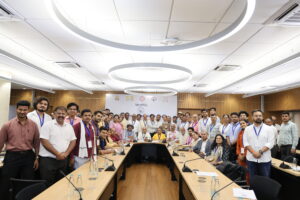
This session focused on expanding biogas infrastructure into a holistic ecosystem covering by-product utilization, community models, and farmer training. Shri Arin Singh Ji (Hathras) opened by discussing vermicomposting and microbial enrichment, emphasizing that organic carbon must return to the soil post-biogas production. Shri Ken Raghavan Ji (Go Seva Activity) shared insights on low-cost flexible balloon digesters for tribal areas, highlighting critical operational failure points like poor dung-to-water ratios, grit, and insufficient acidification. Representatives from the HCL Foundation presented their household composting and community biogas CSR initiatives in Hardoi, noting they are studying Punjab’s model for scale. However, Prof. Deepak Sharma (Udaipur) cautioned that scaling household plants requires addressing high labour intensity and cost-effectiveness. Providing scientific backing, Dr. Ranveer Singh (formerly of IVRI) explained how using indigenous earthworms and applying enriched slurry systematically restores soil micronutrients, improving fodder quality and milk yields.
Shifting to foundational philosophy, Padma Shri Bharat Bhushan Ji urged treating cow-based agriculture as a societal pillar rather than a profit-driven venture. To sustain this movement, he urged IIT Delhi to develop structured training content, citing his own maintenance of a KVIC-model biogas plant installed in 1997 as living evidence that well-built systems can easily last for decades. He also placed strong emphasis on driving a circular economy through these systems. Exploring value-added applications, Dr. Praveen (Bulandshaher) shared research on advanced cow-byproduct liquid formulations and antifungal solutions. On structural innovation, Shri Brijesh Ji (Hathras) introduced a farm design using underground piping and a “head-to-head, tail-to-tail” housing system to optimize dung collection. Complementing this, Shri Lalla Udham Pradhan Ji showcased an elevation-based, gravity-fed “6-in-1” design that distributes slurry directly to fields using sprinklers and mud pumps. Shri Amit Tripathi Ji detailed bio-fermenter units under the UP Atma Nirbhar Goshala initiative that efficiently produce Liquid Organic Manure. Concluding the session, Shri Sensei Raj Ji (Vision India 2032) discussed food security and water security models, and proposed a Green Credit Ecosystem Model to incentivize sustainable rural development.
Session III: Action Plan and Experience-Sharing for Implementation of 1,00,000 Biogas Plants
The third session opened with a comprehensive panel discussion on strategic inputs and the role of carbon credits in scaling decentralized biogas systems. Shri Lalla Udham Pradhan Ji gave the initial inputs by urging participants to treat biogas slurry as a valuable agricultural resource rather than a mere by-product, recommending its integrated application with dung and urine to sustain soil microorganisms during extreme summer heat. Dr. Jayanti Goel highlighted the panel’s focus on carbon credit, noting the removal of household biogas from the 2025 international Article 6 whitelist; in response, Shri Prashant Khanna Ji from Sistema proposed their pioneering Digital MRV flow meter to bridge verification gaps, while Miracle suggested integrating Biodiversity and Water credits. Infusing a community-centric vision, Padma Shri Bharat Bhushan Ji shared his thoughts on the strategy to make the campaign successful. He highlighted public participation, technical cooperation, institutional coordination, and the active involvement of farmers as the key pillars for the campaign’s success. He placed special emphasis on the point that people should not view a biogas plant merely as a technology or a project; instead, they should consider it an integral part of their family and life, connecting with it on a personal and emotional level.
For execution, participants finalized a phased roadmap across Uttar Pradesh, anchoring the initial rollout in pilot clusters around milk unions. Shri Ratnesh Tiwari Ji from Koshish India emphasized that involving Krishi Vigyan Kendras (KVKs) is crucial for driving farmer awareness, and he proposed securing sustainable plant ownership through a beneficiary-contribution model via automated milk-union payment deductions. Moving forward, the implementation will be supported by the HCL Foundation studying Punjab’s community model before expanding, Go Seva Activity coordinating a follow-up meeting in Lucknow, and IIT Delhi developing structured training content to operationalize the strategy.

Closing Session
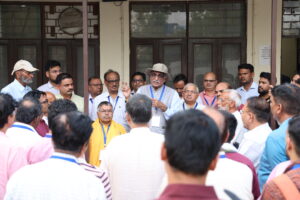
The valedictory session summarized the workshop’s outcomes into an actionable roadmap. All India Organizer, Swadeshi Jagran Manch, Shri Kashmiri Lal Ji, framed the event as a vital collaboration between academia, government, and industry, calling commercial enterprise the essential link between research and field adoption. He asserted that both micro-decentralized and large-scale plants are needed, emphasizing that scaling up requires setting up specialized biogas industries. He urged for the integration of biogas awareness into school and college curricula, greater leadership from women in grassroots programs, and stronger scientific representation of India’s interests in global methane and carbon-credit dialogues. Delivering the Vote of Thanks, Prof. V.K. Vijay re-emphasized the importance of balanced deployment strategies. He called for the rapid development of indigenous technologies tailored to farmers’ real-world needs and the swift integration of carbon-credit benefits into grassroots biogas programs. The workshop concluded with an experiential visit to the Biogas Laboratory at the Centre for Rural Development and Technology (CRDT), IIT Delhi, where researchers and industry partners demonstrated operational systems and ongoing technological advancements.