The End of the “Brotherly” Consensus
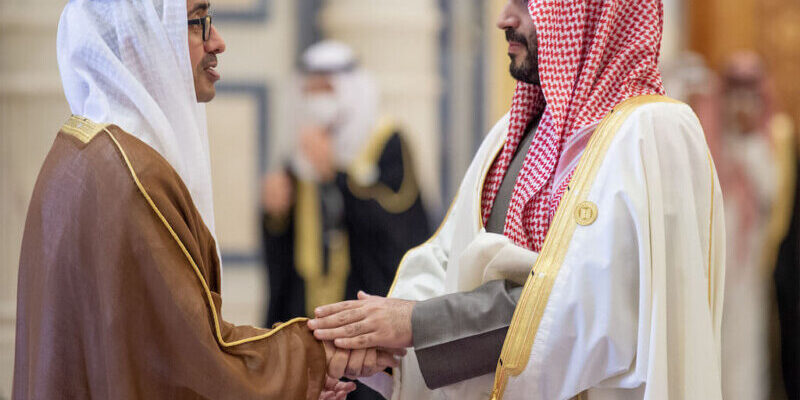
The shifting sands of the Arabian Peninsula are currently witnessing a tectonic realignment that defies decades of conventional geopolitical wisdom. For years, the global perception of the Gulf Cooperation Council (GCC) was one of a monolithic bloc, anchored by the shared interests of petroleum-rich monarchies and a unified front against regional adversaries. However, the United Arab Emirates’ (UAE) recent decision to exit the Organization of the Petroleum Exporting Countries (OPEC) is not merely a technical withdrawal from a trade cartel; it is a loud declaration of strategic independence and the climax of a deepening rivalry with its larger neighbour, Saudi Arabia. To understand the magnitude of this fracture, one must look beyond the shakika (brotherly) rhetoric that often flavours diplomatic communiqués in the region. While Saudi Arabia and the UAE remain deeply integrated, sharing a $31 billion trade relationship and the world’s seventh busiest air corridor between Riyadh and Dubai, the underlying economic and strategic visions of the two nations have begun to diverge sharply.
The Economic Divergence
At the heart of the split is a fundamental disagreement over the future of energy. Saudi Arabia, under the ambitious leadership of Crown Prince Mohammed bin Salman (MBS), is engaged in a high-stakes race to fund Vision 2030. Massive, fantasy-like projects such as the NEOM city require immense capital, which Riyadh seeks to generate by keeping oil prices high, ideally near $90 a barrel. To maintain these prices, Saudi Arabia utilizes OPEC to enforce production quotas, effectively asking members to leave their wealth in the ground to stabilize the market. The UAE, conversely, has reached a different conclusion. Abu Dhabi views the next decade as the twilight of the hydrocarbon era. With the global rise of renewables exemplified by India’s achievement of generating over 50% of its electricity from non-fossil sources and the rapid electrification of the automotive sector in China and Europe, the UAE believes the window to monetize oil is closing. Their strategy is one of volume over price. The UAE has invested billions to expand its production capacity to nearly 5 million barrels per day. From their perspective, being tethered to Saudi-led quotas is an existential threat to their economic future. For the UAE, a price of $60 is sufficient, provided they can sell every drop they produce before oil becomes a stranded asset.
The rivalry extends far beyond the oil rigs. A profound ideological chasm has opened regarding the role of religion in statecraft. The UAE, led by Sheikh Mohammed bin Zayed (MBZ), has decisively broken with political Islam. Abu Dhabi views movements like the Muslim Brotherhood not just as ideological rivals, but as direct security threats to monarchical stability. This has led the UAE to become a nifty and highly modernized military power, often referred to as Little Sparta, which is far more willing to use its professionalized armed forces to protect its interests than the larger, more cautious Saudi military. This ideological divergence has turned regional conflicts into proxy battlegrounds between the two brothers. In Sudan, Saudi Arabia backs the regular armed forces, while the UAE supports the Rapid Support Forces (RSF) militia. In Yemen, while both initially fought the Houthis, the UAE eventually shifted support to the Southern Transitional Council (STC), effectively promoting a divided Yemen to secure its own maritime interests, a move that infuriated Riyadh, which shares a porous and dangerous land border with northern Yemen.
The Breaking of the Social Media Silence
Perhaps the most telling sign of the breakdown is the collapse of the “code of silence” on social media. Historically, criticizing a neighbouring Gulf royal was a punishable offense in both countries. Today, the digital landscape has become a “free-for-all.” Emirati-aligned accounts accuse Riyadh of being sold to islamists, while Saudi-aligned voices retort that the UAE has become a handmaiden to Zionists following the Abraham Accords. As the UAE exits OPEC, it is shedding the constraints of a junior partner. It is no longer content to be the “rebellious younger brother” in a Saudi-led family. By securing its own pipelines such as the one terminating in Fujairah, which bypasses the Iranian-threatened Strait of Hormuz the UAE is building a fortress of strategic autonomy. This realignment does not just change the price of a gallon of gasoline; it fundamentally rewrites the security architecture of the Middle East, with profound implications for global powers and emerging partners like India.
The Indian Pivot: The Geopolitics of Strategic Autonomy
As the UAE asserts its independence from the Saudi-dominated OPEC framework, the tremors of this shift are being felt acutely in New Delhi. For India, the rivalry between Abu Dhabi and Riyadh is not merely a spectator sport; it is a complex diplomatic challenge that demands a recalibration of India’s “Link West” policy. The emerging “war of the brothers” presents both a risk to regional stability and a unique opening for India to deepen its role as a preferred strategic partner.
The recent flurry of high-level diplomacy marked by short, high-intensity stopovers by leaders in each other’s capitals underscores a burgeoning “special relationship.” While Saudi Arabia has traditionally viewed its relationship with India through the lens of energy security and the balancing act with Pakistan, the UAE has moved toward a more integrated strategic embrace. The UAE’s decision to recall its $3.5 billion loan from Pakistan and its refusal to roll over debt a move traditionally unheard of among “brotherly” Islamic nations signals a departure from the old pan-Islamic solidarity. By treating Pakistan as a client state of Saudi Arabia, the UAE has effectively cleared the path to align more closely with India’s economic and security interests. The India-UAE relationship is now anchored in the I2U2 Grouping (India, Israel, UAE, and the USA), often referred to as the West Asian Quad. This framework allows India to engage in joint ventures spanning food security, clean energy, and maritime technology, positioning New Delhi as a pillar of a new, non-oil-dependent regional order.
Navigating the Energy Transition
From an economic standpoint, the UAE’s exit from OPEC is a potential windfall for India. As the world’s third-largest oil consumer, India benefits from a market where producers compete on volume rather than price. If the UAE follows through on its plan to increase exports to 5 million barrels per day, it creates a downward pressure on global prices, a direct relief for India’s fiscal deficit and inflation management. Furthermore, the UAE’s focus on bypassing the Strait of Hormuz via pipelines to the Gulf of Oman aligns with India’s own energy security goals. India has long been wary of the Hormuz Dilemma, where a conflict involving Iran could choke off its primary energy supply. A UAE that is free from the choke point is a more reliable partner for New Delhi.
A Shared Doctrine
The most significant alignment, however, is philosophical. Both India and the UAE are practitioners of Strategic Autonomy. Just as India refuses to be hemmed in by Cold War-style blocs, the UAE is refusing to be the junior partner in a Saudi-led GCC or a mere pawn in the US-Iran rivalry. India now finds itself in a position where it must balance its ties. While the UAE is the niftier, more modernized partner that shares India’s disdain for political Islam, Saudi Arabia remains an indispensable heavyweight with the largest economy in the region and custody of the Two Holy Mosques. India’s challenge will be to support the UAE’s modernization and security evidenced by the potential sharing of defence technology and counter-terrorism cooperation without alienating a Saudi Arabia that is also trying to modernize, albeit at a different pace and with different priorities.
Conclusion
The UAE’s exit from OPEC and its intensifying rivalry with Saudi Arabia marks the end of the Old Middle East, where family ties and oil cartels dictated the rules of engagement. We are entering an era of Realpolitik where, national interest trumps religious or regional solidarity. For India, this unravelling is an invitation to play a larger role. As the UAE looks south and east for partners who value stability, technology, and trade over ideological purity, India stands as the natural beneficiary. The three-hour stopovers in Abu Dhabi are a testament to this: in the new West Asia, time is of the essence, and the old certainties are as fluid as the oil that once defined them. New Delhi must now navigate these shifting sands with the precision of a master surgeon, ensuring that in the rivalry between two brothers, India remains the indispensable friend to both.
By- Kartik Shyam Mogha
Research Associate, Swadeshi Shodh Sansthan