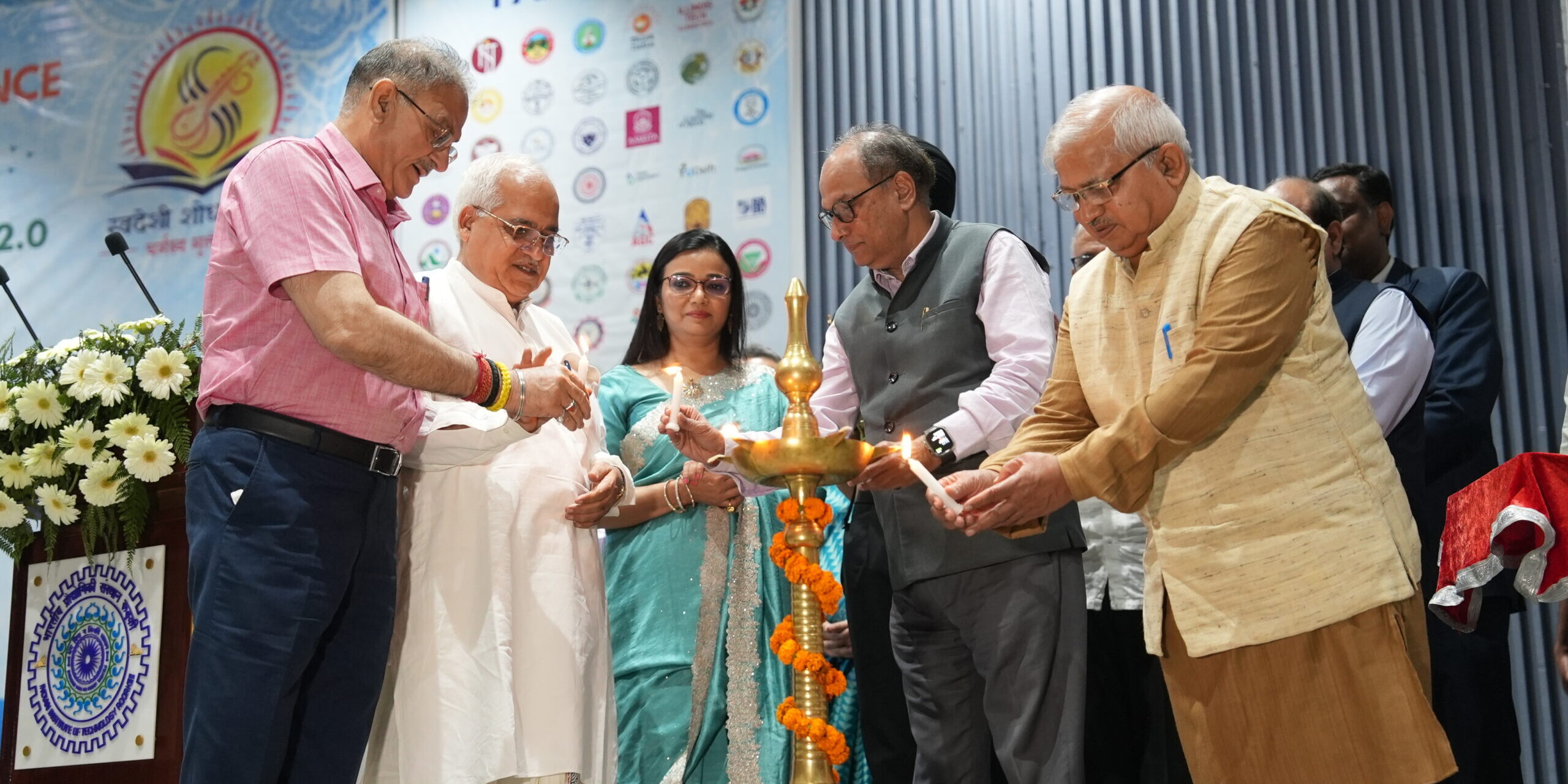
INTERNATIONAL CONFERENCE ON VISION 2047: PROSPEROUS AND GREAT BHARAT 2.0 IIT Roorkee, Collaboration with Swadeshi Shodh Sansthan
Inaugural Session
Date 24th April 2026
Time 10:30 AM to 1:15 PM
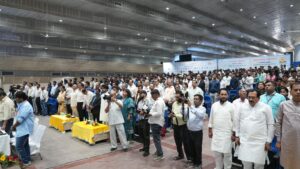
Ceremonial Beginnings The conference commenced with the traditional lighting of the lamp to symbolize the journey from darkness to light, followed by the IIT Roorkee Kulgeet (university song). Dignitaries, including the Honorable Governor of Himachal Pradesh, Shri Kavinder Gupta, were welcomed and felicitated with traditional shawls, mementos, and Pahari caps.
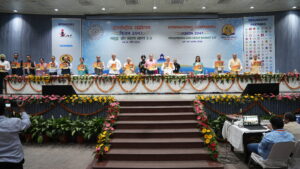
Welcome Address and Vision 2047 Prof. K.K. Pant, Director of IIT Roorkee, delivered the welcome address, highlighting IIT Roorkee’s 178-year legacy and its ongoing contributions to disaster management, infrastructure, and technology. He outlined five core sutras (principles) for a developed India by 2047:
- Formulating a clear National Employment Policy.
- Embracing the “Make for the World” vision to turn job seekers into job providers.
- Establishing a “One Nation, One Research Policy” to align academic research with industrial and societal needs.
- Creating a National Commission on Entrepreneurship to foster startups.
- Strengthening Industry-Academia partnerships. Prof. Pant also emphasized the goal of achieving 50% women’s participation across all sectors, including entrepreneurship and STEM.
Theme Introduction (Vishay Prastavana): Prof. Somnath Sachdeva, Executive Chairperson of Swadeshi Shodh Sansthan, introduced the core philosophy of the conference, rooted in Pandit Deendayal Upadhyay’s Integral Humanism and Dattopant Thengadi’s Swadeshi model. He outlined eight verticals for the nation’s holistic development: Vibrant Demography, a Fully Employed Bharat, a Leading Economy driven by “production by masses,” Indomitable Defense, Leadership in Science & Technology, Environment-friendly development, Global respect (Vasudhaiva Kutumbakam), and High Moral Values.
Policy Launches and Institutional Initiatives Prof. Akshay Dwivedi discussed IIT Roorkee’s practical interventions, such as the TechSarthi scheme aiding MSMEs and the Rural Smart Village Center in Khunt, Almora, where technical intervention helped villagers plant 1 lakh mulberry trees for sericulture, reversing urban migration. A major highlight of the session was the proposal and presentation of the National Employment Policy Act of Bharat, which rests on five pillars: inclusive definition of employment, recognition and formalization of traditional occupations, continuous capacity building, market access, and institutional accountability.
Keynote Addresses by Dignitaries
- Shri K.N. Raghunandan (Vidya Bharati): Spoke on the National Education Policy (NEP) 2020, emphasizing that education must focus on holistic personality development (Panchakosh) rather than just job preparation. He noted that students should be equipped with multidisciplinary skills to adapt to multiple employments in the future.
- Shri Satish Kumar (Swadeshi Jagran Manch): Argued that instead of merely chasing GDP, India should focus on QDP (Quality Domestic Product) and a 100% employment rate. He also stressed the urgent need for energy independence, suggesting that simple lifestyle changes—like setting air conditioners to 20°C instead of 16°C—could significantly reduce India’s energy import bills.
- During the session, the Annual Report of Swadeshi Shodh Sansthan and a book titled “Saral Samagra Swadeshi” authored by Shri Satish Kumar were officially released by the Governor and other dignitaries.
Ministerial Addresses (Virtual)
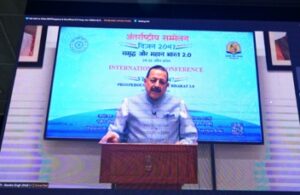
- Dr. Jitendra Singh (Minister of Science & Technology): Highlighted the government’s recently approved BioE3 Policy (Biotechnology for Economy, Environment, and Employment). He noted that India’s bioeconomy has grown from $10 billion in 2014 to over $130 billion, driven by initiatives like genome sequencing, indigenous antibiotics, and space biotechnology missions.
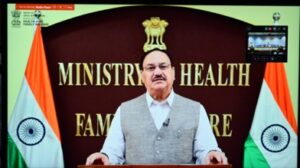
- Shri J.P. Nadda (Minister of Health & Family Welfare): Emphasized that a developed India must balance rapid economic growth with social equity, environmental sustainability, and preventive healthcare.
Chief Guest’s Address Shri Kavinder Gupta, Honorable Governor of Himachal Pradesh, delivered the concluding visionary remarks. He celebrated India’s leap in the Global Innovation Index from 81st to 39th place and its presence in the top five nations for critical technologies. He urged the youth to focus on solving grassroots problems, challenging every student to file at least one patent before graduating, ensuring it addresses a real-world Indian issue rather than just copying a textbook. He also expressed deep concern over the melting Himalayan glaciers, proposing a joint Himachal-Uttarakhand Vision Partnership 2047 to create a “Green Hydrogen Corridor”.
The inauguration formally concluded with a Vote of Thanks by Prof. U.P. Singh (Deputy Director, IIT Roorkee), followed by the singing of Vande Mataram and the National Anthem.