
Introduction
In Asian geopolitics, the growing Chinese presence in South Asian infrastructure is a defining feature of contemporary era. Dhaka’s government decision to give the modernization project of Mongla Port to Chinese firm illustrates strategic competition in the Bay of Bengal. Even though, under the Bangladesh’s national development agenda, this project is primarily presented as an infrastructure and economic initiative. This project has significant geopolitical implications due to trade route, logistics, regional influence, and maritime security. China’s involvement or takeover of Mongla Port raises several important strategic questions for India. It is not only a project which India needs to see the kens of security competition with China only instead it is also important to discuss how Bangladesh’s infrastructure choices reflect broader economic incentives, regional connectivity, and the limitations of India’s neighbourhood policy.
Why Mongla Port Matters?
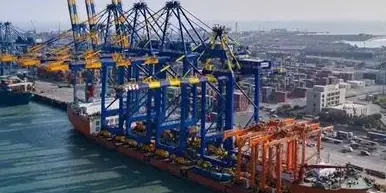
After Chittagong, Mongla is the second-largest and second-busiest port of Bangladesh. It is 188 km from Kolkata and strategically located near Sunderbans on the Pashur River in Southwestern Bangladesh. Bangladesh has permitted Indian cargo to use its Chittagong and Mongla Port since 2018. These ports gave valuable access to India for its North-eastern states and also reduced dependence on narrow Siliguri Corridor. For Kolkata, this port offers shorter shipping routes and better logistical flexibilities. So, the strategic importance of Mongla Port extends beyond cargo handling. Its position is very important in the Bay of Bengal because it is connecting South Asia with Southeast Asia and the wider Indo-Pacific maritime network.
During Prime Minister Narendra Modi’s visit to Dhaka in 2015, Mongla Port emerged at a joint declaration. Mongla Port and Mirsarai near Chittagong were two economic zones committed in this visit. It was aimed to boost bilateral trade through government-to-government framework (G2G). The Indian government nominated Hiranandani group to develop the land for the Mongla economic zone in March 2018. And after four years, in March 2022, BEZA (Bangladesh Economic Zone Authority) signed a MoU with Hiranandani subsidiary, Evita Construction. As Business Standard reported, BEZA officials claims that the company did not start construction within two years, that is why we are delisted the project. Though India extended US$ 115 million from its line of credit to support the project in 2019 and BEZA also signed an agreement with Adani group which would not succeed.
Why Bangladesh Turned to China
For India, Bangladesh’s cooperation with China is not only reflects simple geopolitical alignment but also underlines practical and serious economic calculations. The major reason of Bangladesh’s turned to China is it has financial capacity, extensive experience in large-scale infrastructure construction, and also have the ability to execute projects relatively quickly than India. So, China can fulfil immediately infrastructure financing to Bangladesh for port modernization, and industrial expansion. Dhaka’s policy to turned to China is a strategy to search maximize economic opportunities with preserving national decision-making autonomy.
Strategic Implications for India
For India, Chinese involvement in critical infrastructure near Bay of Bengal unavoidably attracts strategic attention. One of India’s foremost strategic concern is China’s policy of encirclement, widely known as the “String of Pearls” strategy. Under this strategy, China has sought to develop ports and maritime facilities at strategically important chokepoints across the India Ocean Region, thereby expanding its geopolitical and military influence while potentially constraining India’s strategic space. Furthermore, Mongla Port maybe regarded as another “pearl” in China’s “String of Pearls”. Second, this development underscores the gradual expansion of China’s economic influence across South Asia. Infrastructure projects often foster long-term commercial partnerships, political engagements, and technical cooperation, thereby increasing China’s strategic presence in the region. Third, the development raises significant concerns for India’s maritime security. Although the project is officially commercial in nature, there are apprehensions that China could potentially leverage the port for strategic or military purposes in the future under certain geopolitical circumstances. Such possibilities would have important implications for India’s security environment in the Bay of Bengal and the wider Indian Ocean Region. Fourth, this port will also impact on India’s regional connectivity vision such as: Neighbourhood First Policy, Act East Policy, SAGAR or MAHASAGAR Policy, BIMSTEC etc.
Fifth, the agreements and MoUs (Memorandum of Understanding) signed between Bangladesh and China regarding the development of Mongla Port have raised questions about India’s image as a reliable and cooperative regional partner. Traditionally, India has been regarded as a responsible neighbour committed to supporting regional connectivity and infrastructural development. However, Bangladesh’s growing engagement with China is strategic infrastructural projects or economic zones may reflect declining confidence in India’s ability to deliver major projects in a pre-decided time period and effective manner.
Where India Fell Short
From India’s side, it is important to examine structural limitations in New Delhi’s regional engagement. First, the progress of implementation of initiatives across South Asia is very slow due to bureaucratic procedure, environmental clearances, and coordination challenges. Secondly, India’s financial resources remain comparatively limited and it makes difficult to compete across every major project in the region. Thirdly, India have insufficient commercial integration with Bangladesh, limiting its economic influence. Fourthly, India’s diplomacy has often been perceived as reactive rather than proactive, creating gap in the timely implementation of strategic moves and also limiting its ability to effectively counter China’s expanding influence in the region. Fifth, Bangladesh is increasingly evaluating its external partnerships on the basis of tangible outcomes and economic benefits rather than relying solely on historical and cultural ties. This pragmatic approach has enabled Dhaka to diversify its strategic and economic partnerships in pursuit of its national development projects.
Conclusion
Mongla Port is more than a commercial infrastructure project; it symbolizes the changing strategic and economic landscape of South Asia. Bangladesh’s engagement with Chinese underlines its quest for diversifying development partnerships. The Mongla Port project exemplifies the changing dynamics of South Asian geopolitics, where economic capability is shaping strategic influence. The major challenge for India is not simply China’s growing presence in neighbourhood but the need to remain a competitive, reliable, and responsive development partner. So, India’s long-term strategic interests in the Bay of Bengal will therefore depend less on countering individual Chinese projects and more on offering neighbouring countries compelling, timely, and mutually beneficial alternatives.
References
- Aid Data (2025), China EXIM Bank financing for the modernization of Mongla Port.
- Asian Development Bank (2024), Asian Development Outlook 2024.
- International Monetary Fund (2025). World Economic Outlook Database.
- Ministry of External Affairs, Government of India. (2025), Annual Report.
- Ministry of Shipping, Government of Bangladesh. (2025), Expansion and Development of Facilities at Mongla Port.
- Organisation for Economic Co-operation and Development (2024). Global Infrastructure Outlook.
- United Nations Conference on Trade and Development (2024). Review of Maritime Transport.
- World Bank (2024), Bangladesh Development Update.
- World Bank (2025), World Development Indicators.