
Event Report: Talk on “Climate Change, Disaster and Society”
Organized by
Swadeshi Shodh Sansthan (Delhi Chapter) under the Environment Friendly Bharat Vertical
9 October 2026 | 03:00 PM | Conference Hall, Gyan Kunj, Swadeshi Shodh Sansthan, New Delhi
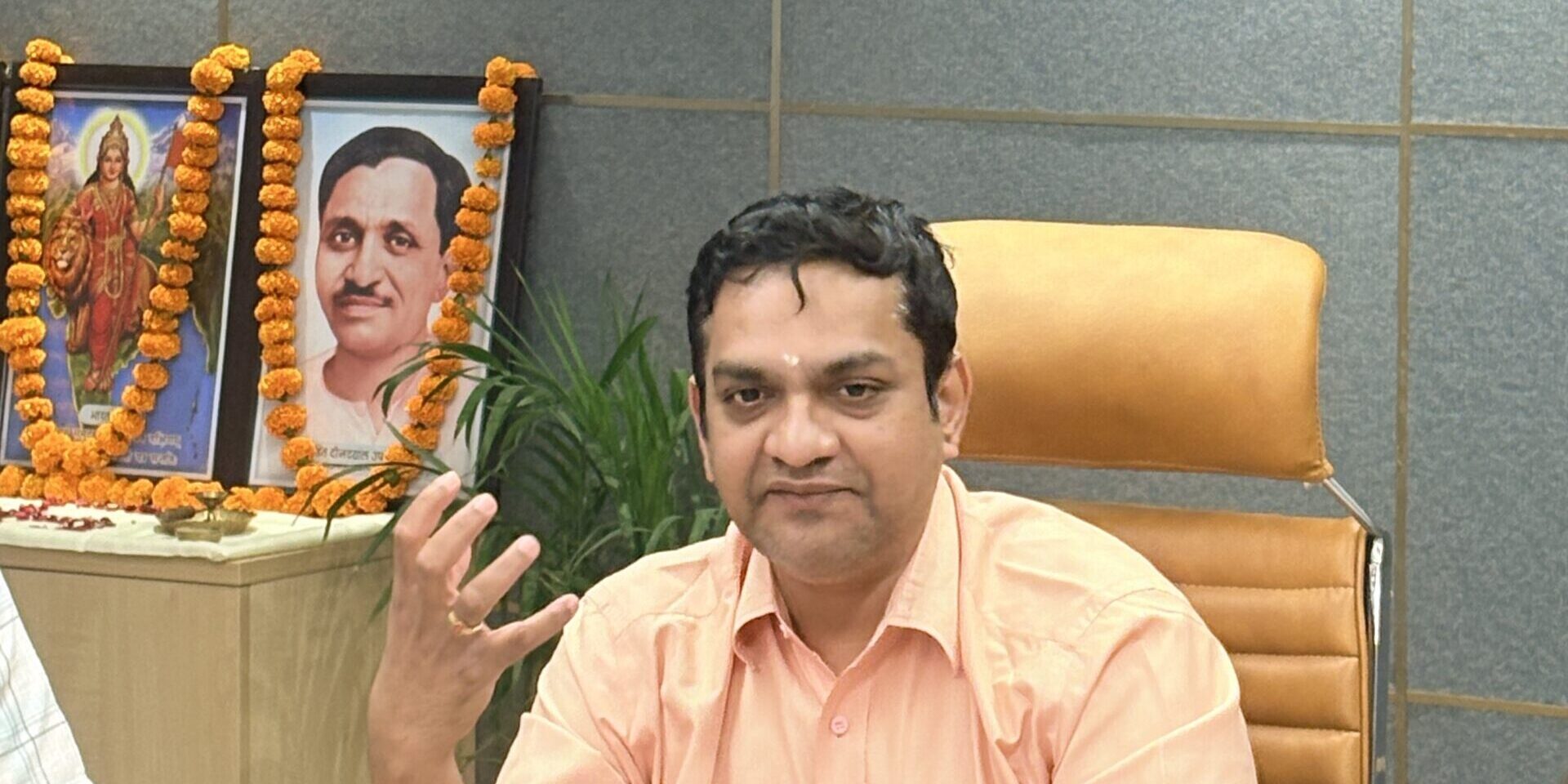
Keynote Speaker : Dr V. Venkat Ramanan (Associate Professor, School of Interdisciplinary and Transdisciplinary Studies, Indira Gandhi National Open University)
Vertical: Environment Friendly Bharat
Number of attendees: 25
Mentor: Prof. Nandini Sinha Kapoor
Research Assistant: Nikhil Shrivastava
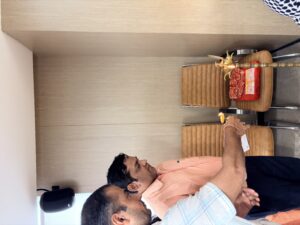
The session commenced at 3:30 PM with an opening address introducing the core theme: understanding the convergence of environmental collapse, catastrophic climate events, and societal vulnerabilities. The session was anchored by Dr Jasvir Dalal, who welcomed Dr Sarabjeet Kaur to introduce the guest speaker, Dr V. Venkat Ramanan, highlighting the urgency of transdisciplinary dialogue in managing contemporary ecological risks.
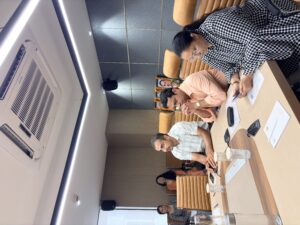
Dr Ramanan explained that humanity has severely disrupted the Earth system across nine defined planetary boundaries, with several thresholds already crossing irreversible tipping points. He noted that modern climate change is defined by an unprecedented rapid warming rate of 1°C within a single century. In this Anthropocene epoch, human activities serve as the primary driver of rapid global transformation and escalating biodiversity loss.
The speaker broke down interactions across the atmosphere, hydrosphere, cryosphere, vegetation, and soil. With atmospheric carbon dioxide concentrations reaching 420 ppm, oceans are experiencing heightened thermal expansion, acidification, and reduced capacity to sequester carbon. Melting glaciers threaten positive albedo feedback loops and risk releasing trapped methane reservoirs. Restoring soil ecosystems and vegetative cover was emphasised as essential for sequestering atmospheric carbon.
The presentation illustrated how climate dynamics amplify the frequency, scale, and gravity of extreme events, including cloudbursts, cyclones, droughts, and compound heatwaves. Dr Ramanan underlined that vulnerable demographics, specifically marginalised socioeconomic segments and coastal communities, bear the brunt of these compound disasters. Key institutional hurdles were highlighted, including the scientific complexity of modelling multi-hazard compound events, inertia in public behavioural change, and short-term political cycles failing to address gradual decadal warming trends.
Mitigation strategies must align with global mechanisms such as the Paris Agreement under the principle of Common but Differentiated Responsibilities. On the ground, actionable approaches include scaling up precision agriculture (using drones and sensor technologies) and temporal-spatial crop diversification away from vulnerable monocultures.
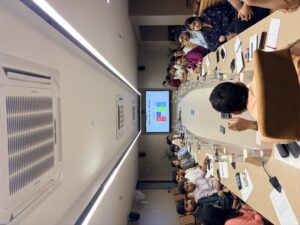
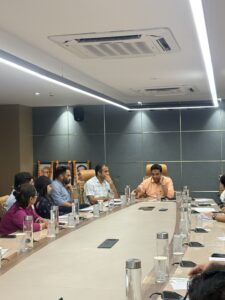
He further suggested a few steps towards making people aware of the issue, where academic stakeholders are to brainstorm, map out, and chart localised avenues for mitigating climate impact and building community resilience. Reconvene a follow-up interactive forum to present the charted avenues, facilitating cross-pollination of policy ideas, institutional problem-solving, and climate literacy initiatives.
The session concluded at 5:30 PM with a formal vote of thanks followed by the National Anthem.
– by kartik mogha