
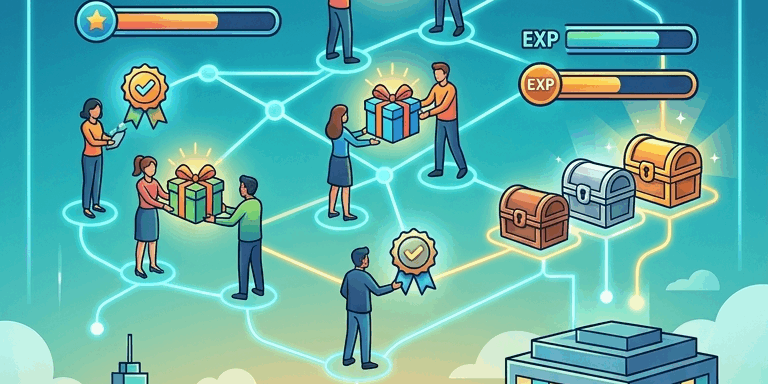
Building trust, awareness, and customer loyalty is typically the hardest thing for first-time entrepreneurs to do. They don’t have legacy networks, brand recognition, or big marketing resources like established corporations do. In this context, gamified referral programs—which combine the power of word-of-mouth with the psychology of play—offer a scalable, cost-effective, and emotionally resonant growth strategy.
Gamification transforms referrals from a passive act into an engaging experience. By integrating points, badges, leaderboards, or tiered rewards, entrepreneurs can motivate customers to actively promote their ventures. This article explores the mechanics, benefits, challenges, and case studies of gamified referral programs, with a focus on how first-generation entrepreneurs can harness them to accelerate growth.
The Psychology of Gamified Referrals
Gamification works because it taps into intrinsic human motivators:
Competition: Leaderboards and rankings make customers want to do better than their colleagues.
Achievement: Badges, milestones, and tiered rewards provide a sense of accomplishment.
Social Recognition: Sharing referrals publicly builds status within communities.
Reward Anticipation: Unlocking perks or exclusive benefits keeps customers engaged.
For entrepreneurs, this means referrals are no longer just transactional—they become part of a community-driven growth journey.
Why First-Generation Entrepreneurs Benefit Most
First-generation entrepreneurs often face:
Limited marketing budgets → Gamified referrals reduce acquisition costs.
Need for credibility → Peer recommendations build trust faster than ads.
Community-building goals → Gamification fosters loyal, engaged customer bases.
Scalability challenges → Referral systems grow organically without heavy infrastructure.
Thus, gamified referrals align perfectly with their growth trajectory.
Core Elements of Gamified Referral Programs
Element Function Example
Points System Customers earn points for each referral. A bakery offering 10 points per friend referred, redeemable for free pastries.
Tiered Rewards Higher levels unlock better perks.
- Bronze → free coffee
- Silver → discount vouchers
- Gold → exclusive event invites.
Leaderboards Public rankings encourage competition. Fitness app showing top referrers weekly.
Badges & Achievements Symbolic recognition for milestones.
“Community Builder” badge after 5 referrals.
Social Sharing Tools Easy referral links for WhatsApp, Instagram, etc. Clothing brand enabling one-click referral posts.
Case Studies of Gamified Referrals
1. Dropbox – The Classic Two-Sided Referral
Strategy: Offered extra storage to both referrer and referee.
Impact: Sign-ups increased by 60%.
Lesson for Entrepreneurs: Simple, mutual rewards can drive exponential growth.
2. Airbnb – Community Expansion
Strategy: Gamified referral credits for both hosts and guests.
Impact: 25% growth in user base within a year.
Lesson: Gamification works best when aligned with community values.
3. Evernote – Gamified Loyalty
Strategy: Points system with tiered rewards for referrals.
Impact: Boosted retention and engagement.
Lesson: Gamification sustains long-term loyalty, not just acquisition.
4. Local Bakery (Hypothetical First-Gen Example)
Imagine a first-generation entrepreneur running an egg-free bakery:
Customers earn points for each referral.
Leaderboard shows “Top Foodies of the Month.”
Tiered rewards: free cupcakes, exclusive tasting events, or co-creation opportunities.
Result: Builds a loyal, values-driven community around health and inclusivity.
5. Uber – Global Domination via Referrals
Strategy: Free ride credits for referrals.
Impact: Rapid international expansion.
Lesson: Gamified referrals can scale across geographies.
Designing Gamified Referral Programs for First-Generation Entrepreneurs
Step 1: Define Goals
Acquisition? Engagement? Loyalty?
Example: A women-led social enterprise may prioritize community engagement over sheer numbers.
Step 2: Choose Mechanics
Points, badges, leaderboards, or tiered rewards.
Align with customer values (e.g., eco-conscious rewards for sustainable brands).
Step 3: Integrate Seamlessly
Use CRM tools or apps to automate tracking.
Ensure referral links are easy to share via WhatsApp, Instagram, or LinkedIn.
Track referral-driven revenue, retention, and engagement.
Step 4: Measure ROI
Track referral-driven revenue, retention, and engagement.
Showcase metrics to investors as proof of organic demand.
Challenges & Solutions
| Challenge | Risk | Solution |
| Referral Fatigue | Customers lose interest if rewards feel repetitive. | Rotate rewards, and add surprise bonuses. |
| Quality Control | Not all referrals fit target audience. | Screen referrals with onboarding filters. |
| Over-Incentivization | Makes referrals feel transactional. | Balance symbolic recognition with tangible rewards. |
| Tech Integration | Difficult for small ventures. | Use affordable plug-ins or referral platforms. |
Cultural Context – India & First-Generation Entrepreneurs
In India, where trust networks and word-of-mouth dominate consumer behavior:
- Gamified referrals resonate with collectivist culture.
- WhatsApp and Instagram sharing amplify reach.
- Women-led ventures can leverage referrals to build empowerment-driven communities.
Future Trends
- AI-Powered Personalization: Tailored rewards based on customer behavior.
- Blockchain-Based Rewards: Transparent, secure referral tracking.
- Community Co-Creation: Customers earn badges for contributing ideas, not just referrals.
- Integration with Social Causes: Referrals tied to donations or impact metrics.
Gamified referral programs are more than marketing tactics—they are community-building engines. For first-generation entrepreneurs, they provide:
- Affordable growth.
- Authentic trust.
- Scalable engagement.
- Investor credibility.
By weaving gamification into referrals, entrepreneurs can transform customers into advocates, co-creators, and loyal community members.
Author : Kamalika Krishmy, Baker and communication coach