Abstract
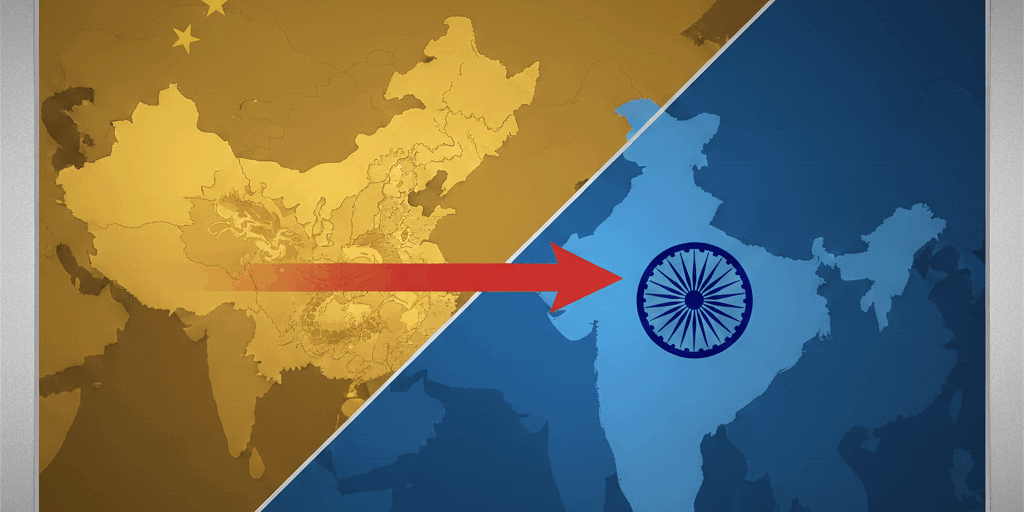
China currently is the biggest threat to the US-dominated world order due to its economy. China and the US has a mixed relations in the past. Presently, China is in the negotiations with the US or tarrif and previously was going through a trade war with Washington. This paper will analyse the China-US relations bit from history, during the trade war and currently how China is handling the US and its imposed tariff of 150%. This paper will also deal with what India can learn from China when dealing with the US and suggestions regarding how China can deal better with the US. How should the contemporary China-United States rivalry be theoretically understood within the context of an increasingly globalised world, particularly when examined through the evolving interaction between structural constraints and state agency shaped by economic globalisation? To what extent can this rivalry be interpreted as a product of broader geopolitical transformations and long-term patterns of economic development that have reconfigured the international system over recent decades? Alternatively, should the rivalry be examined through an agency-centred perspective that conceptualises it as the consequence of deliberate actions, strategic choices, and policy decisions undertaken by key actors? From this viewpoint, the China-US rivalry emerges from the initiatives of political leaders, policymakers, diplomats, think tanks, and a wider constellation of state and non-state actors who actively shape its trajectory.
Keywords: China, United States, strategic rivalry, multipolar world order, economic competition, economic globalisation, geopolitical transformation.
Introduction
The onset of Trump’s second term has brought about unexpected realignments, most notably the growing influence of China’s governance and development model on segments of the American technology sector. This influence is being amplified by support from mainland Chinese conservatives and first-generation Chinese immigrants in the United States, who have increasingly aligned themselves with and bolstered Trump’s policies and ideological framework. This convergence merits careful examination, particularly in light of the emerging parallels between Xi Jinping’s politically centralised, socially conservative, and techno-nationalist approach and the core beliefs of the ‘Make America Great Again’ (MAGA) agenda. The development is especially striking given the prevailing view among analysts that China’s soft power appeal has generally been limited, resonating meaningfully only in certain parts of the Global South.
Meaningful and lasting cooperation between Beijing and Washington is unlikely to become a long-term objective. Nevertheless, as the two powers show growing convergence in key elements of their respective paths, this apparent paradox warrants deeper analysis, particularly in terms of its consequences for the European Union and the evolving global order.
US-China Relations: A Historical Framework
Historically, the United States and China have appeared fundamentally dissimilar. China, as one of the world’s oldest civilisations, grappled with unsuccessful attempts at democratic governance throughout much of the twentieth century. By contrast, the United States, among the youngest modern nation-states, has sustained the world’s oldest continuously functioning constitutional democracy. A Marxist and officially atheist political system thus stands in sharp contrast to a deeply religious society that has long defined itself through strong anti-communist traditions.
China’s emergence as a major scientific power is a relatively recent phenomenon, taking shape largely over the past decade and propelled by engineers and techno-optimistic innovators. The United States, on the other hand, has exercised scientific leadership for nearly a century. Yet in recent years, its domestic political environment has witnessed the rise of figures who openly challenge scientific evidence, accompanied by growing resistance to evidence-based policymaking and a weakening of science-driven diplomacy in international relations.
Whereas the United States approach toward China has often been framed through messianic narratives rooted in religion, human rights, and democratic universalism, frequently accompanied by nativist and racialised discourses exemplified by the “Yellow Peril” trope, China’s strategy has been characterised by a more coherent and sustained narrative. Beijing has consistently portrayed itself as a champion of what it terms “material” or “tangible” human rights, though this position has historically been accompanied by an undercurrent of comparative resentment. Together, these dynamics have produced a deeply ambivalent relationship marked by alternating phases of cooperation and confrontation, continually revealing the structural and ideological contradictions between the two powers.
The bilateral relationship between the United States and China is among the most significant and multifaceted in the contemporary international system. Since 1949, interactions between the two states have alternated between phases of confrontation and collaboration, encompassing critical issues such as trade, climate governance, and the Taiwan question.
1949: People’s Republic of China Established
On 1st October 1949, Chinese Communist Party leader Mao Zedong proclaimed the establishment of the People’s Republic of China in Beijing following the defeat of Chiang Kai-shek’s Nationalist government by Communist forces supported largely by the peasantry. Chiang Kai-shek and a substantial number of his military personnel retreated to Taiwan, where they maintained the Republic of China government in exile. The United States, having supported the Nationalists during their resistance against Japanese aggression in World War II, extended diplomatic and political backing to the Taipei-based Republic of China, thereby contributing to several decades of constrained and limited engagement with mainland China.
1950: Korean War Breaks Out
On 25 June 1950, the Soviet-supported North Korean People’s Army launched an invasion of South Korea, prompting a rapid military response from the United States and United Nations forces in defence of the South. As US, UN, and South Korean troops advanced toward the Chinese border, China intervened militarily in support of the communist North. The ensuing conflict lasted three years and resulted in an estimated four million casualties, concluding in 1953 with the signing of an armistice agreement by the United Nations, China, and North Korea.
August 1954: First Taiwan Strait Crisis
In 1953, President Dwight D. Eisenhower terminated the US naval blockade of Taiwan, a decision that enabled Chiang Kai-shek to deploy several thousand troops to the Quemoy and Matsu islands in the Taiwan Strait by August 1954. In response, the People’s Liberation Army of mainland China initiated artillery bombardments of the islands. Subsequently, Washington formalised its commitment to Chiang’s Nationalist government through the signing of a mutual defence treaty. In the spring of 1955, the United States issued threats of nuclear retaliation against China, after which Beijing agreed in April to enter negotiations, portraying the Nationalists’ withdrawal from Dachen Island as a limited strategic success. Similar crises in the Taiwan Strait re-emerged in 1956 and again in 1996.
March 1959: Tibetan Uprising
Approximately nine years after the People’s Republic of China consolidated control over Tibet, a large-scale uprising erupted in Lhasa. The subsequent suppression by PRC forces resulted in thousands of deaths and led to the Dalai Lama’s flight into exile in India. In response, the United States, alongside the United Nations, formally criticised Beijing for human rights violations in Tibet, while the Central Intelligence Agency began providing covert assistance, including arms, to elements of the Tibetan resistance in the late 1950s.
October 1964: China’s First Atomic Test
In October 1964, China entered the ranks of nuclear-armed states with the successful detonation of its first atomic device. This development occurred against the backdrop of heightened Sino-American tensions, particularly in relation to the intensifying conflict in Vietnam. At the time of the nuclear test, China had also deployed substantial military forces along its border with Vietnam.
March 1969: Sino-Soviet Border Conflict
Divergences in security interests, ideological orientation, and development strategies have increasingly tense relations between China and the Soviet Union. China’s radical industrialisation initiative, the Great Leap Forward, prompted the Soviet Union to withdraw its technical advisers in 1960. These tensions ultimately escalated into armed border clashes in March 1969. As a result, Moscow ousted Washington as China’s principal perceived security threat, and the Sino-Soviet split played a significant role in shaping Beijing’s subsequent move toward reconciliation with the United States.
April 1971: Ping-Pong Diplomacy
The first visible indication of improving US-China relations occurred on 6 April 1971, when China’s national ping-pong team extended an invitation to its American counterparts. Journalists accompanying the US delegation became some of the first Americans permitted to enter China since 1949. In July 1971, Secretary of State Henry Kissinger conducted a clandestine visit to Beijing, shortly before the United Nations formally recognised the People’s Republic of China, granting it the permanent seat on the Security Council previously held by Chiang Kai-shek’s Republic of China in Taiwan since 1945.
February 1972: Nixon Visits China
In February 1972, President Richard Nixon undertook an eight-day visit to China, during which he met with Chairman Mao Zedong and signed the Shanghai Communiqué alongside Premier Zhou Enlai. The communiqué laid the groundwork for enhanced US-China relations by establishing a framework for dialogue on contentious issues, most notably the status of Taiwan. Nevertheless, the process of fully normalising bilateral relations proceeded at a slow pace throughout much of the 1970s.
1979: Formal Ties and One China Policy
US President Jimmy Carter extended full diplomatic recognition to the People’s Republic of China, formally acknowledging the One-China principle and terminating official diplomatic relations with Taiwan. Shortly thereafter, Chinese Vice Premier Deng Xiaoping, who was overseeing significant economic reforms in China, visited the United States. In April, however, the US Congress enacted the Taiwan Relations Act, which permitted the continuation of commercial and cultural interactions between the United States and Taiwan. The legislation mandated that Washington supply defensive arms to Taipei, while remaining consistent with the United States’ commitment to the ‘One-China policy’.
July 1982: China in a Reagan Era
The Reagan administration issued the “Six Assurances” to Taiwan, which included commitments to uphold the Taiwan Relations Act, to refrain from acting as a mediator between Taiwan and China, and to maintain ongoing arms sales without a predetermined termination date. In August 1982, the administration signed a third joint communiqué with the People’s Republic of China aimed at further normalizing bilateral relations, reaffirming the United States’ adherence to the One-China policy. Although President Reagan had expressed support for strengthening ties with Taiwan during his campaign, his administration prioritised enhancing relations with Beijing amid heightened US concerns regarding Soviet expansionism. Reagan visited China in April 1984, and by June of that year, the US government authorised China to procure US military equipment.
June 1989: Tiananmen Square Massacre
In the spring of 1989, large-scale student-led demonstrations took place in Beijing’s Tiananmen Square, calling for democratic reforms and measures to combat government corruption. On 3 June, Chinese authorities deployed military forces to disperse the protesters, resulting in the deaths of hundreds of individuals. In reaction to the crackdown, the United States suspended military sales to China and imposed a freeze on certain aspects of bilateral relations.
September 1983: Prominent Dissidents Deported
In September 1993, China released Wei Jingsheng, who had been imprisoned for political activities since 1979. That same year, President Bill Clinton initiated a policy of “constructive engagement” with China. Following China’s unsuccessful bid to host the 2000 Olympic Games, Wei was re-imprisoned by the Chinese authorities. Four years later, President Clinton facilitated the release of Wei and Tiananmen Square protester Wang Dan, both of whom were subsequently deported to the United States by Beijing.
March 1996: Taiwan’s First Presidential Vote
In March 1996, the Nationalist Party’s Lee Teng-hui secured a decisive victory in Taiwan’s first direct presidential election, despite Chinese missile tests intended to influence voters against the pro-independence candidate. The election occurred one year after China had recalled its ambassador in response to President Clinton’s authorization of a visit by Lee, which reversed a fifteen-year US policy prohibiting visas for Taiwan’s leaders. By 1996, the United States and China had agreed to resume the exchange of diplomatic officials.
May 1999: Belgrade Embassy Bombing
In May 1999, during NATO’s military campaign against Serbian forces in Kosovo, the Chinese embassy in Belgrade was inadvertently bombed, straining US-China relations. The United States and NATO issued formal apologies for the intelligence errors that resulted in the attack, yet the incident provoked widespread domestic protests in China, with thousands of demonstrators targeting official US property.
October 2000: Normalized Trade Relations
In October 2000, President Clinton enacted the US-China Relations Act, granting China permanent normal trade relations with the United States and facilitating its accession to the World Trade Organization in 2001. Between 1980 and 2004, bilateral trade between the two countries expanded dramatically, increasing from 5 billion dollars to 231 billion dollars. By 2006, China had surpassed Mexico to become the United States’ second-largest trading partner, following Canada.
April 2001: US-Sino Spy Plane Standoff
In April 2001, a US reconnaissance aircraft collided with a Chinese fighter jet and was forced to make an emergency landing on Chinese territory. Chinese authorities on Hainan Island detained the twenty-four-member US crew. Following a twelve-day period of heightened tension, the crew was released, and President George W. Bush conveyed regret over both the death of the Chinese pilot and the forced landing of the US aircraft.
September 2005: ‘Responsible Stakeholder’
In a September 2005 address, Deputy Secretary of State Robert B. Zoellick launched a strategic dialogue with China, acknowledging Beijing’s rising global influence and urging it to act as a “responsible stakeholder” by leveraging its position to integrate countries such as Sudan, North Korea, and Iran into the international system. That same year, North Korea withdrew from the Six-Party Talks aimed at curbing its nuclear program. Following Pyongyang’s first nuclear test in October 2006, China assumed a mediating role to facilitate North Korea’s return to the negotiation process.
March 2007: China Increases Military Spending
In March 2007, China declared an 18 percent increase in its defence budget for the year, bringing total military spending to over 45 billion dollars. Between 1990 and 2005, annual growth in military expenditures averaged 15 percent. During a 2007 tour of Asia, US Vice President Dick Cheney remarked that China’s military expansion was “not consistent” with its professed objective of a “peaceful rise”. In response, Chinese authorities stated that the increased funding aimed to improve training and raise salaries for military personnel, as well as to safeguard national security and territorial integrity.
September 2008: China Becomes Largest US Foreign Creditor
In September 2008, China overtook Japan to become the largest foreign holder of US Treasury securities, with holdings totalling approximately 600 billion dollars. The escalating economic interdependence between the United States and China became increasingly apparent as the global financial crisis unfolded, raising concerns regarding bilateral economic imbalances.
August 2010: China Becomes World’s Second-Largest Economy
In the second quarter of 2010, China surpassed Japan to become the world’s second-largest economy, with a valuation of 1.33 trillion dollars compared to Japan’s 1.28 trillion dollars. According to Goldman Sachs chief economist Jim O’Neill, China is projected to overtake the United States as the world’s largest economy by 2027. At the beginning of 2011, China reported a total GDP of 5.88 trillion dollars for 2010, exceeding Japan’s 5.47 trillion dollars.
September 2011: US ‘Pivots’ Towards Asia
In a Foreign Policy essay, US Secretary of State Hillary Clinton articulated a strategic “pivot” toward Asia, advocating for “increased investment diplomatic, economic, strategic, and otherwise in the Asia-Pacific region”, a policy widely interpreted as aimed at counterbalancing China’s rising influence. In the same month, during the Asia-Pacific Economic Cooperation summit, President Barack Obama announced that the United States and eight other countries had reached an agreement on the Trans-Pacific Partnership, a multinational free trade accord. Subsequently, Obama revealed plans to deploy 2,500 US Marines to Australia, a move that elicited criticism from Beijing.
February 2012: Rising Trade Tensions
The US trade deficit with China increased from 273.1 billion dollars in 2010 to a record 295.5 billion dollars in 2011, representing approximately three-quarters of the total growth in the US trade deficit for that year. In March 2011, the United States, the European Union, and Japan filed a “request for consultations” with China at the World Trade Organization concerning Beijing’s export restrictions on rare earth metals. The complainants argued that China’s quotas violated international trade norms and compelled multinational companies dependent on these materials to relocate production to China. In response, China characterised the action as “rash and unfair” and affirmed its intention to defend its rights in trade disputes.
April 2012: Dissident Flees to US Embassy
On April 22, blind Chinese dissident Chen Guangcheng escaped house arrest in Shandong province and sought refuge at the US embassy in Beijing. US diplomats subsequently negotiated an agreement with Chinese authorities permitting Chen to remain in China and pursue legal studies in a city near the capital. After relocating to Beijing, however, Chen requested to enter the United States. The situation posed a potential challenge to US-China diplomatic relations, but both governments avoided a crisis by arranging for Chen to travel to the United States as a student rather than as an asylum seeker.
November 2012: China’s New Leadership
The 18th National Party Congress concluded with the most extensive leadership transition in decades, as approximately 70 percent of members across China’s principal governing bodies like the Politburo Standing Committee, the Central Military Commission, and the State Council were replaced. Li Keqiang assumed the position of premier, while Xi Jinping succeeded Hu Jintao as president, Communist Party general secretary, and chairman of the Central Military Commission. Following his appointment, Xi delivered a series of speeches emphasizing the “rejuvenation” of China.
June 7-8, 2013: Sunnylands Summit
President Obama hosted President Xi Jinping at the Sunnylands Estate in California for a “shirt-sleeves summit”, aiming to foster a personal rapport and reduce tensions in US-China relations. During the meeting, the leaders committed to enhanced cooperation on key bilateral, regional, and global challenges, including climate change and North Korea. They also pledged to develop a “new model” of bilateral relations, reflecting Xi’s vision of a “new type of great power relations” between the United States and China.
May 19, 2014: US Indicts Chinese Nationals
A US court indicted five Chinese nationals, reportedly affiliated with China’s People’s Liberation Army, on charges of expropriating trade secrets from American companies. In retaliation, Beijing suspended its participation in the US-China cybersecurity working group. By June 2015, US authorities indicated that evidence linked Chinese hackers to a significant cyberattack on the Office of Personnel Management, resulting in the theft of data pertaining to twenty-two million current and former federal employees.
November 12, 2014: Joint Climate Announcement
During the 2014 Asia-Pacific Economic Cooperation summit, Presidents Obama and Xi issued a joint statement on climate change, committing to reductions in carbon emissions. Obama announced a more ambitious target for US emissions reductions, while Xi pledged for the first time that China would cap the growth of its carbon emissions by 2030. These pledges by the world’s two largest emitters generated optimism among experts that they could strengthen momentum for international negotiations leading up to the 2015 UN Climate Change Conference in Paris.
May 30, 2015: US Warns China Over South China Sea
At the fourteenth annual Shangri-La Dialogue on Asian security, US Secretary of Defence Ashton Carter urged China to cease its contentious land reclamation activities in the South China Sea, asserting that the United States opposed “any further militarization” of the disputed areas. Prior to the conference, US officials indicated that satellite and naval surveillance imagery provided evidence of China deploying military equipment on a series of artificial islands, despite Beijing’s assertions that the construction was primarily intended for civilian purposes.
February 9, 2017: Trump Affirms One China Policy After Raising Doubts
US President Donald Trump affirmed his intention to uphold the ‘One-China policy’ during a call with President Xi Jinping. However, following his electoral victory, Trump diverged from longstanding protocol by speaking directly with Taiwanese President Tsai Ing-wen and questioning the US commitment to the policy. For four decades, US policy has recognized a single China, maintaining formal diplomatic relations with the People’s Republic of China while sustaining unofficial ties with Taiwan, including the provision of defence assistance. During a visit to Beijing in March, Secretary of State Rex Tillerson characterized the US-China relationship as one “built on nonconfrontation, no conflict, mutual respect, and always searching for win-win solutions”.
April 6-7, 2017: Trump Host Xi at Mar-a-Lago
President Trump hosted President Xi Jinping for a two-day summit at the Mar-a-Lago estate in Florida, with bilateral trade and North Korea as the primary topics of discussion. Following the summit, Trump highlighted “tremendous progress” in US-China relations, while Xi emphasized a strengthened mutual understanding and increased trust. In mid-May, US Commerce Secretary Wilbur Ross announced a ten-point agreement between Beijing and Washington aimed at expanding trade in products and services, including beef, poultry, and electronic payments. Ross characterized the bilateral relationship as “reaching a new high”, although the agreement did not address more contentious trade issues, such as aluminium, automotive parts, and steel.
March 22, 2018: Trump Tariffs Target China
The Trump administration announced broad-based tariffs on Chinese imports valued at a minimum of 50 billion dollars, citing alleged Chinese practices involving the misappropriation of US technology and intellectual property. Introduced following earlier tariffs on steel and aluminium, these measures targeted a wide range of products, including apparel, footwear, and electronic goods, and imposed additional restrictions on certain Chinese investments in the United States. In response, China implemented retaliatory tariffs on various US products in early April, intensifying concerns about a potential trade war between the world’s two largest economies. This development signalled a marked hardening of President Trump’s China policy following a series of high-level summits with President Xi Jinping in April and November 2017.
July 6, 2018: US-China Trade War Escalates
The Trump administration imposed additional tariffs on Chinese imports totalling approximately 34 billion dollars. More than eight hundred Chinese products, primarily in the industrial and transportation sectors, along with consumer goods such as televisions and medical devices, were subjected to a 25 percent import duty. China responded with reciprocal tariffs on over five hundred US products, likewise valued at around 34 billion dollars, targeting key agricultural and food commodities. President Trump and senior officials argued that China was exploiting international free trade rules to the disadvantage of US firms operating in China, while Beijing denounced the measures as “trade bullying” and warned that escalating tariffs could destabilize global markets.
October 4, 2018: Pence Speech Signals Hard-Line Approach
US Vice President Mike Pence delivered a speech that represented the most explicit articulation to date of the Trump administration’s policy toward China and signalled a pronounced hardening of the United States’ stance. In his remarks, Pence asserted that Washington would emphasize strategic competition over cooperation, including the use of tariffs to counter what he described as “economic aggression”. He further criticized China’s military activities, particularly in the South China Sea, denounced what he characterized as intensified censorship and religious repression, and accused Beijing of intellectual property theft and interference in US domestic political processes. China’s Ministry of Foreign Affairs rejected these claims as “groundless accusations” and cautioned that such rhetoric and actions risked undermining bilateral relations.
December 1, 2018: Canada Arrests Huawei Executive
Meng Wanzhou, the chief financial officer of the Chinese telecommunications firm Huawei, was arrested in Canada at the request of the United States. The US Department of Justice alleged that Huawei and Meng had violated US sanctions on Iran and engaged in fraudulent activities, and it subsequently sought her extradition. In what was widely viewed as a retaliatory measure, Chinese authorities detained two Canadian citizens on charges related to threats to national security. Characterizing Meng’s arrest as a “serious political incident”, Chinese officials called for her immediate release. In September 2021, Meng reached a deferred prosecution agreement with US authorities and was permitted to return to China, after which the Chinese government released the two Canadian detainees.
March 6, 2019: Huawei Sues the United States
During the course of the legal proceedings involving Meng Wanzhou, Huawei initiated a separate lawsuit against the United States challenging the prohibition on US federal agencies’ use of the company’s telecommunications equipment. Concurrently, as part of a broader contest with Beijing over technological leadership, the Trump administration pursued an assertive diplomatic and policy campaign urging allied and partner countries to exclude Huawei from the development of fifth-generation (5G) networks, citing concerns that the Chinese government could exploit the company’s technology for espionage purposes.
May 10, 2019: Trade War Intensifies
Following the collapse of bilateral trade negotiations, the Trump administration increased tariff rates from 10 percent to 25 percent on approximately 200 billion dollars’ worth of Chinese imports. In response, China announced its intention to raise tariffs on 60 billion dollars’ worth of US goods. President Trump asserted that the heightened tariff burden would compel China to reach an agreement favourable to the United States, while China’s Ministry of Foreign Affairs criticized Washington’s position as reflecting “extravagant expectations”. Shortly thereafter, the Trump administration prohibited US firms from utilizing foreign-made telecommunications equipment deemed to pose national security risks, a measure widely interpreted as targeting Huawei. In addition, the US Department of Commerce placed Huawei on its foreign entity blacklist.
August 5, 2019: US Labels China a Currency Manipulator
After China’s central bank permitted a notable depreciation of the yuan, the Trump administration formally designated China a currency manipulator. This designation, applied to China for the first time since 1994, was largely symbolic but followed less than a week after President Trump announced increased tariffs on approximately 300 billion dollars’ worth of Chinese imports, effectively subjecting all US imports from China to tariffs. In response, Beijing cautioned that the designation could “trigger financial market turmoil”.
November 27, 2019: Trump Signs Bill Supporting Hong Kong Protesters
President Trump signed the Hong Kong Human Rights and Democracy Act into law following its passage by overwhelming majorities in the US Congress. The legislation empowers the United States to impose sanctions on individuals deemed responsible for human rights violations in Hong Kong and mandates annual assessments by US authorities of whether the territory maintains a “high degree of autonomy” from Beijing. The law was welcomed by pro-democracy protesters, who had been mobilizing since June. In response, Chinese officials denounced the legislation, imposed sanctions on several US-based organizations, and suspended visits by US naval vessels to Hong Kong.
January 15, 2020: ‘Phase One’ Trade Deal Signed
President Trump and Chinese Vice Premier Liu He signed a trade agreement that marked a significant development in the nearly two-year trade dispute between the world’s two largest economies. The accord reduced certain US tariffs on Chinese imports and committed China to purchasing an additional 200 billion dollars’ worth of US goods, including agricultural products and automobiles, over a two-year period. China also agreed to strengthen the enforcement of intellectual property protections. However, the agreement left most tariffs in place and did not address China’s extensive system of government subsidies, a longstanding concern for the United States, although President Trump indicated that this issue could be addressed in subsequent negotiations. In the days preceding the agreement, the United States rescinded its designation of China as a currency manipulator.
January 31, 2020: Tensions Soar Amid COVID-19 Pandemic
In response to the emergence of a novel coronavirus first identified in Wuhan, China, the Trump administration implemented travel restrictions prohibiting entry into the United States by non-US citizens who had recently been in mainland China. By March, the World Health Organization (WHO) had declared the outbreak a global pandemic as infections spread to more than one hundred countries. Senior officials in both China and the United States engaged in mutual recriminations regarding responsibility for the crisis. A spokesperson from China’s Ministry of Foreign Affairs, without providing substantiating evidence, alleged that the virus had been introduced into China by the US military, while President Trump repeatedly referred to the disease as the “Chinese virus”, attributing its global spread to shortcomings in China’s governance. In April, high-level officials in both countries moderated their rhetoric by emphasizing potential areas for cooperation in managing the crisis. Nevertheless, President Trump accused the WHO of bias in favour of China and suspended US financial contributions to the organization.
March 18, 2020: China Expels American Journalists
The Chinese government expelled at least thirteen journalists affiliated with three major US newspapers, the New York Times, Wall Street Journal, and Washington Post whose press credentials were due to expire in 2020. Beijing also required these organizations, along with TIME magazine and Voice of America, to provide detailed information regarding their operations in China. The Chinese Ministry of Foreign Affairs stated that these measures were taken in retaliation for earlier US government actions, which had capped the number of Chinese journalists from five state-run media outlets in the United States at 100, reduced from 160, and formally designated those outlets as foreign missions. In November 2021, the United States and China reached an agreement to ease restrictions on journalists operating in each other’s countries.
July 14, 2020: Trump Ends Hong Kong’s Special Status
Two weeks after Beijing enacted a new national security law for Hong Kong, President Trump issued an executive order terminating the city’s preferential trade status with the United States. He also signed legislation authorizing sanctions against officials and entities deemed responsible for undermining Hong Kong’s freedoms and autonomy. In response, Chinese authorities warned of retaliatory measures targeting US individuals and organizations, condemning the actions as unwarranted interference in China’s internal affairs. These criticisms also encompassed Washington’s prior announcement declaring the majority of Beijing’s claims in the South China Sea to be inconsistent with international law.
July 22, 2020: China Close Consulates in Diplomatic Escalation
The United States directed China to close its consulate in Houston, Texas, citing allegations that the facility functioned as a center for espionage and the theft of intellectual property. Beijing denounced the decision and responded by ordering the closure of the US consulate in Chengdu. During the same week, US authorities indicted two Chinese nationals on charges related to the alleged theft of research on coronavirus vaccines and imposed sanctions on eleven Chinese companies accused of involvement in human rights violations in Xinjiang. In response to these developments, Chinese Foreign Minister Wang Yi attributed the escalation of bilateral tensions to actions taken by the United States.
July 23, 2020: Pompeo Says Engagement with China Has Failed
US Secretary of State Mike Pompeo delivered a speech entitled “Communist China and the Free World’s Future”, marking a significant reorientation in US policy toward China. In his address, Pompeo asserted that the longstanding strategy of engagement with the Chinese Communist Party had reached its limits, criticizing Beijing for unfair trade practices, intellectual property violations, human rights abuses in Xinjiang and Hong Kong, and assertive actions in the East and South China Seas. He further urged Chinese citizens and democratic governments globally to exert pressure on China to alter its conduct and adhere to the norms of the rules-based international order.
November-December 2020: Trump Ramps Up Pressure as Transition Looms
In the final weeks of his presidency, President Trump sought to reinforce his administration’s hard-line approach toward China. Director of National Intelligence John Ratcliffe characterized China as “the greatest threat to America today,” while the US Department of Commerce placed dozens of Chinese firms, including the country’s leading semiconductor producer, Semiconductor Manufacturing International Corporation (SMIC), on its trade blacklist. The State Department further tightened visa restrictions for approximately ninety million members of the Chinese Communist Party and imposed additional sanctions on Chinese officials, including fourteen members of China’s legislative body, in response to alleged human rights abuses in Hong Kong, Xinjiang, and other regions. The administration also prohibited US investments in Chinese companies alleged to have links to the People’s Liberation Army. In response, Chinese authorities pledged retaliatory measures against these and other actions undertaken by the Trump administration.
January 21, 2021: US Designates China’s Abuses of Uyghurs as Genocide
On the final day of President Trump’s tenure, Secretary of State Mike Pompeo formally declared that China was committing crimes against humanity and genocide against the Uyghur Muslim population in Xinjiang. The United States became the first country to label the Chinese government’s actions in the region with these terms. The Chinese government rejected the characterization of genocide. The subsequent Biden administration upheld Pompeo’s determination and, by the end of the year, implemented a ban on all imports originating from Xinjiang.
March 19, 2021: Biden Maintains Trump Tariffs, Other Tough Measures
The inaugural in-person meeting between senior officials of the Biden administration and their Chinese counterparts, held in Anchorage, Alaska, highlighted significant disagreements and concluded without a joint statement. In the subsequent months, the Biden administration retained several policies from the Trump era while placing greater emphasis on coordinating actions with international allies. Measures maintained included tariffs on Chinese imports, sanctions on Chinese officials in response to actions in Hong Kong and Xinjiang, the blacklisting of numerous Chinese companies, and an expansion of the previous ban on US investments in Chinese firms linked to the military. In his first address to Congress in April, President Biden emphasized the need to increase investment in domestic infrastructure and technology to enhance competitiveness with China.
June 14, 2021: At US Urging, NATO Declares China a ‘Security Challenge’
NATO, historically focused on deterring Russian aggression and addressing terrorism, issued a communiqué broadening the alliance’s strategic priorities to include potential threats from China, such as its nuclear weapons development and military modernization. The statement asserted that “China’s stated ambitions and assertive behaviour present systemic challenges to the rules-based international order and to areas relevant to alliance security”. This marked the first occasion that a NATO communiqué explicitly referenced China as a source of concern. The declaration coincided with efforts by the Biden administration to encourage allied nations to adopt a coordinated approach toward China.
November 10, 2021: Collaboration on Climate Change Amid Tensions
During the UN Climate Summit in Glasgow, the United States and China, the world’s largest greenhouse gas emitters, issued a joint statement committing to enhanced cooperation on climate action over the next decade. The agreement outlines collaborative efforts to expand the use of renewable energy, establish regulatory frameworks, and implement technologies such as carbon capture. Officials from both countries praised the accord, with Chinese climate envoy Xie Zhenhua noting that “there is more agreement between the United States and China than divergence”.
November 15, 2021: Biden, Xi Discuss ‘Guardrails’ to Avoid Conflict
The first formal meeting between Presidents Biden and Xi since Biden assumed office was conducted virtually and lasted over three hours. As in the earlier Anchorage meeting, both leaders raised longstanding points of contention: Biden emphasized concerns regarding human rights abuses in China, while Xi characterized US support for Taiwan as akin to “playing with fire”. The discussion produced no significant breakthroughs or joint statement; however, Biden noted that the talks established “guardrails” to prevent conflict, and analysts regarded the occurrence of the meeting itself as a constructive development.
February 4, 2022: US Imposes Diplomatic Boycott on Beijing Olympics
The United States announced a diplomatic boycott of the Winter Olympics in Beijing, citing human rights violations by the Chinese government in Xinjiang and other regions. Several other countries, including Australia, Canada, and the United Kingdom, also declined to send official delegations. Chinese authorities criticized the boycott, asserting that the United States sought to “politicize sports, create divisions, and provoke confrontation”. While no athletes staged public protests during the Games, some chose to forgo the opening ceremony and voiced criticisms of China’s human rights record afterward.
March 18, 2022: Biden Presses Xi on Russia’s War in Ukraine
Days after US officials reported that Russia had sought military assistance from China, President Biden held a video conference with President Xi, warning of potential “consequences” should China provide material support. The call occurred weeks into Russia’s invasion of Ukraine, during which China declined to condemn Russian President Vladimir Putin or the ensuing humanitarian crisis. Chinese diplomats and state media also propagated a Russian narrative alleging that the United States was funding biological weapons laboratories in Ukraine. During the discussion, Biden outlined sanctions and coordinated measures with allied nations to penalize Russia, while Xi criticized the sanctions, asserting that they “would only make people suffer”. Both leaders affirmed their support for peace negotiations.
May 26, 2022: Biden’s China Strategy a Call to Revive US Competitiveness
In a highly anticipated address, Secretary of State Antony Blinken underscored the need to strengthen US competitiveness in response to China. He characterized China as the “most serious long-term challenge to the international order”, highlighting the contrast between Beijing’s authoritarian governance and the United States’ commitment to promoting democracy and human rights, while emphasizing Washington’s determination to avoid conflict. The Biden administration’s approach rests on three main pillars: investing in domestic industry, technology, and infrastructure; coordinating with allies and partners to counter China’s growing assertiveness; and engaging in global competition with China. The Chinese Ministry of Foreign Affairs condemned Blinken’s remarks as “disinformation”, asserting instead that China serves as a “guardian of the international order”.
August 2, 2022: Tensions Flare Over Pelosi’s Visit to Taiwan
Following several months of warnings from Chinese officials regarding US engagement with Taiwan, US House Speaker Nancy Pelosi visited Taipei, stating that the purpose of her trip was to demonstrate American support for the island. In response, Beijing suspended US-China climate negotiations, curtailed certain high-level military communication channels, and imposed sanctions on Pelosi. The Chinese military conducted large-scale live-fire exercises encircling Taiwan, exceeding the scope of manoeuvres during the 1996 Taiwan Strait Crisis, launched ballistic missiles over the island, some landing within Japan’s exclusive economic zone and flew aircraft across the median line separating mainland China and Taiwan. The Group of Seven (G7) condemned China’s “aggressive military activity,” warning that it posed risks to regional stability. While the Chinese Foreign Ministry attributed the heightened tensions to US actions, Taiwanese President Tsai Ing-wen argued that China’s response had undermined the existing status quo.
October 7, 2022: US Restrictions Shock China’s Chip Industry
The US Department of Commerce implemented broad restrictions on the export of advanced computing chips and related equipment to China. According to Commerce officials, these technologies are being used by China to “develop advanced military systems” and “perpetrate human rights abuses”. US companies and individuals seeking to contribute to China’s semiconductor development now require government authorization, and the restrictions extend to foreign firms that utilize US-origin tools or software. Analysts anticipate that the measures will significantly constrain China’s domestic semiconductor industry, which, despite substantial government investment in recent years, remains unable to produce the most advanced chips. A spokesperson for China’s Ministry of Foreign Affairs stated that the restrictions would “only hurt and isolate” the United States.
November 14, 2022: Biden, Xi Seeks to Repair the Relationship
In Indonesia, Presidents Biden and Xi held their first in-person meeting since Biden assumed office. Both leaders conveyed a shared interest in reducing bilateral tensions and agreed to restore communication channels, including climate negotiations that had been suspended several months earlier. Biden emphasized that the United States would “compete vigorously” with China while clarifying that he was “not looking for conflict”. Xi highlighted the need for the two nations to “explore the right way to get along,” according to a statement from China’s Ministry of Foreign Affairs. During the three-hour discussion, the leaders also addressed Russia’s war in Ukraine. The US readout indicated that both sides opposed the use of nuclear weapons in the conflict, whereas the Chinese statement did not reference nuclear arms. Additionally, Biden raised concerns regarding human rights abuses in Xinjiang and Chinese military pressure on Taiwan, reaffirming that US policy toward the island remains unchanged.
February 4, 2023: US Shoots Down Suspected Chinese Spy Balloon
President Biden directed the US Air Force to shoot down a Chinese-operated balloon off the south-eastern coast of the United States after security officials determined that it was conducting surveillance on sensitive military sites. China characterized the balloon as a civilian weather-monitoring device that had inadvertently entered US airspace and condemned its destruction as “a serious violation of international practice,” pledging retaliatory measures. The incident prompted the Biden administration to cancel a planned visit to Beijing by Secretary of State Antony Blinken, exacerbating concerns over the deterioration of US-China relations already strained by US support for Taiwan and ongoing trade disputes.
November 15, 2023: Biden and Xi Hold Talks Following APEC Summit
The two leaders convened in San Francisco for their first meeting in a year, addressing issues including Taiwan, the South China Sea, and conflicts in Ukraine and the Middle East. During the discussions, they agreed to reinstate a bilateral working group focused on combating illicit drug production, resume high-level military-to-military communications, and establish a new working group to assess the risks associated with artificial intelligence. Xi also proposed sending new pandas to Washington as a gesture of goodwill following the previous pandas’ departure in October 2023. The summit was intended to signal a partial restoration of bilateral relations, although it ultimately fell short of expectations.
April 2024: High-Level Bilateral Meetings Signalled Improved Contacts Amid Strains
On April 2, Presidents Biden and Xi conducted a phone call to reaffirm the agenda established during their November summit, including ongoing cooperation on climate change and people-to-people exchanges. Concurrently, US Treasury Secretary Janet Yellen led an economic delegation to China, while US Defence Secretary Lloyd Austin resumed talks with China’s Minister of National Defence, Admiral Dong Jun, marking the first such dialogue since November 2022. On April 26, Secretary of State Antony Blinken visited Shanghai and Beijing to meet with senior Chinese officials, including Xi, warning against Chinese support for Russia’s war in Ukraine and addressing issues such as North Korea’s nuclear and missile programs and the Israel-Hamas conflict. Less than a month later, the Biden administration implemented new US tariffs on Chinese electric vehicles and other green technologies.
April 2, 2025: Trump’s ‘Liberation Day’ Tariffs Ramp Up Trade War
Just two months into his second term, President Trump intensified the trade conflict with China that began during his first administration. Following a sequence of reciprocal tariff measures, in April he implemented the largest tariff increase on all US trading partners since the 1930 Smoot-Hawley Tariff Act, historically associated with deepening the Great Depression. After global markets experienced significant declines, Trump announced a ninety-day pause on tariffs for all countries except China, prompting a renewed cycle of retaliatory tariffs between the two nations. By April 11, US tariffs on Chinese goods reached 145 percent, while Chinese tariffs on US goods stood at 125 percent, supplemented by a 15 percent tariff on US energy products, 10 percent on crude oil and agricultural machinery, and 10-15 percent on various US agricultural exports.
China’s Management of Rivalry with the United States
Strategic Patience and Long-Term Planning
A defining feature of China’s approach to rivalry with the United States is its emphasis on strategic patience. Rather than seeking immediate parity or direct confrontation, China has historically prioritized long-term capacity building. Through sustained investments in infrastructure, education, industrial upgrading, and technological innovation, Beijing has focused on altering the structural foundations of power rather than engaging in episodic diplomatic or military escalation. This long-horizon perspective reflects a belief that relative power shifts are best achieved through gradual economic and technological transformation rather than reactive geopolitical moves.
Economic Interdependence as a Strategic Tool
China has consciously leveraged economic interdependence to manage rivalry. Despite growing tensions, Beijing has avoided a wholesale decoupling from the U.S.-led global economy. Instead, it has pursued selective diversification, reducing vulnerability in critical sectors such as semiconductors and energy while maintaining engagement in global trade, finance, and supply chains. This strategy allows China to benefit from globalization while simultaneously insulating itself against coercive economic measures. Economic pragmatism thus functions as a stabilizing mechanism, limiting the scope of confrontation even amid political hostility.
Selective Assertiveness and Issue-Based Competition
China’s rivalry management is also characterized by selective assertiveness. Beijing distinguishes between core interests, such as sovereignty, regime security, and territorial integrity and peripheral issues where compromise remains possible. In areas deemed vital, China has demonstrated willingness to absorb diplomatic or economic costs, while in other domains it continues to cooperate with the United States, including climate change, global health, and macroeconomic stability. This issue-based compartmentalisation enables China to contest U.S. influence without triggering systemic conflict.
Narrative and Normative Contestation
Beyond material power, China has invested heavily in shaping global narratives and norms. Through diplomatic discourse emphasising multipolarity, development, and non-interference, Beijing seeks to challenge U.S.-centric conceptions of global governance without outright rejection of existing institutions. Participation in multilateral forums and parallel institution-building reflects an attempt to reform rather than overturn the international order, thereby positioning China as a responsible stakeholder while advancing its own strategic interests.
Lessons for India
- Prioritising Structural Capacity over Tactical Alignment
One of the most significant lessons for India is the importance of focusing on internal capacity building as the foundation of external influence. China’s experience demonstrates that sustained economic growth, industrial depth, and technological capability enhance strategic autonomy more effectively than short-term geopolitical alignments. For India, this underscores the need to invest in manufacturing, human capital, and innovation ecosystems rather than relying excessively on external partnerships to offset strategic challenges.
- Balancing Engagement and Autonomy
China’s ability to maintain engagement with the United States despite rivalry highlights the utility of pragmatic diplomacy. India can draw from this approach by deepening cooperation with the U.S. in areas of mutual benefit, such as technology, defence, and climate action, while preserving policy flexibility and avoiding rigid bloc politics. Strategic autonomy need not imply disengagement; rather, it requires the capacity to manage partnerships without becoming dependent or constrained.
- Using Economic Statecraft Strategically
China’s selective use of economic statecraft offers lessons for India in managing asymmetries. By identifying sectors of vulnerability and prioritising self-reliance in critical technologies, India can reduce exposure to external pressure. At the same time, continued integration into global markets can serve as a source of leverage and resilience. A calibrated approach to globalisation, rather than wholesale protectionism or liberalisation, is therefore essential.
- Developing a Coherent Strategic Narrative
China’s emphasis on narrative-building illustrates the importance of ideological and normative dimensions of power. India, with its democratic credentials and civilizational depth, is well positioned to articulate an alternative vision of global order that emphasises pluralism, development, and rule-based cooperation. Crafting a coherent strategic narrative can enhance India’s influence without necessitating confrontational posturing.
- Use ‘Deterrence’ as a Strategic Instrument
China has increasingly employed deterrence as a strategic instrument to balance power and reinforce its sovereignty claims over Taiwan. Through sustained military signalling, Beijing seeks to warn external actors against interfering in what it defines as Taiwan’s internal affairs and against entering into defence agreements with what it considers a breakaway province. At the core of this approach lies China’s determination to compel international acceptance of its “One China Policy” by political, diplomatic, and military means.
The recent two-day large-scale military drills conducted around Taiwan, following the approval of new US arms sales to the island, exemplify this strategy. Although such exercises were not unprecedented, they represented a deliberate escalation in signalling. The drills were intended not only to demonstrate China’s growing military capabilities but also to communicate Beijing’s strategic vision and resolve regarding Taiwan. By conducting exercises encircling the island, China sought to underscore its capacity to impose military pressure while deterring both Taiwan and external powers, particularly the United States, from altering the status quo. These actions reflect a broader pattern in which China combines military posturing with diplomatic messaging to shape international perceptions and constrain adversarial behaviour without resorting to direct conflict. Deterrence, in this context, functions as a tool of coercive signalling rather than immediate warfare.
India may draw important lessons from this approach. While operating within a different strategic and normative framework, India can employ calibrated deterrence to reinforce its interests in the Indian Ocean Region and with respect to Pakistan-occupied Kashmir (PoK). By strengthening military preparedness, enhancing maritime presence, and signalling resolve without provoking escalation, India can assert its strategic interests while maintaining stability. However, unlike China’s coercive model, India’s deterrence strategy must remain anchored in its commitment to international law, regional stability, and responsible power projection.
Conclusion
China’s management of its rivalry with the United States reflects a nuanced blend of restraint, assertiveness, and long-term strategic planning. Rather than framing competition as an existential conflict, Beijing has sought to reshape structural conditions in its favour while maintaining engagement with the existing international system. For India, the key lesson lies not in emulating China’s political model, but in adopting a similarly patient, capacity-driven, and strategically autonomous approach to great-power competition. As global power configurations continue to evolve, India’s ability to internalise these lessons will be critical in shaping its role as an independent and influential actor in the emerging multipolar order.
– Dr. Reeta, Research Associate