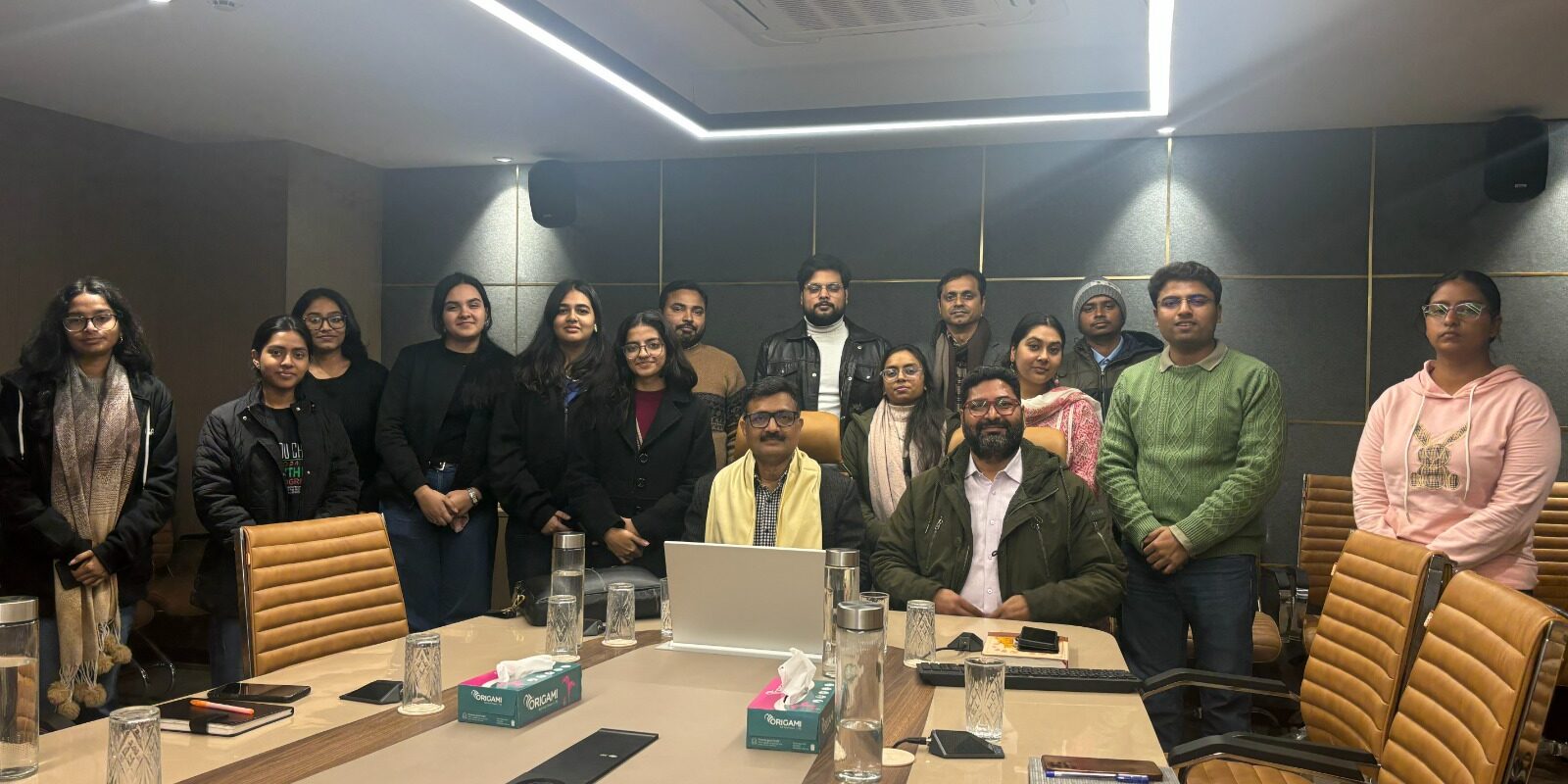
On the occasion of its ongoing academic outreach initiatives, Swadeshi Shodh Sansthan organised a special session under its Talk Series Vertical – Global Outlook & Bharat on 2nd February 2026 at Gyan Kunj, Pandit Deen Dayal Upadhyaya Marg, ITO, Delhi. The programme, held from 3 PM onwards, focused on contemporary global developments and India’s emerging leadership role through the theme “Bharat’s BRICS Presidency: Shaping Global South Leadership in a Multipolar World.” The session aimed to foster informed dialogue on international relations, multilateral cooperation, and India’s strategic positioning in the evolving global order.
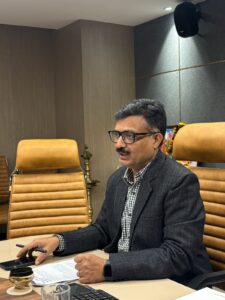
The programme was graced by Prof. Amitabh Singh from the School of International Studies, Jawaharlal Nehru University (JNU) as the chief guest, and Prof. Suresh Kumar from the Department of African Studies (Academician and Author). The Chief Guest delivered an insightful and comprehensive address on the growing importance of BRICS in the present geopolitical landscape. He highlighted how the post-pandemic world has witnessed a shift towards multipolarity, with Asia, particularly India and China, emerging as pivotal global actors. Emphasising Bharat’s expanding international stature after COVID-19, Prof. Amitabh Singh noted that India’s diplomatic credibility, economic/ resilience, and leadership in multilateral platforms have significantly strengthened its standing on the world stage.
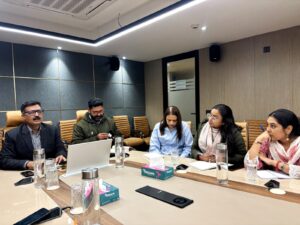
During the session,the chief guest elaborated on the transformation of BRICS from a purely economic grouping into a broader platform representing the aspirations of the Global South. He explained how the recent expansion of BRICS, including the inclusion of countries such as Egypt, Ethiopia, Iran, Saudi Arabia, UAE, and Indonesia, reflects the organisation’s growing influence and relevance. He stressed that BRICS is not positioned as an anti-West alliance, but rather as a non-West cooperative platform that complements the global order by promoting inclusive development and equitable representation.
Highlighting Bharat’s leadership vision, Prof. Singh underlined India’s role as a bridge-builder between the Global South and developed economies. He spoke about India’s efforts to project BRICS as a people-centric grouping focused on sustainable development, innovation, climate action, global health cooperation, digital public infrastructure, and institutional reforms. Special emphasis was laid on India’s promotion of Digital Public Infrastructure models such as Aadhaar, UPI, and CoWIN as successful frameworks that can be adapted by developing nations to enhance digital inclusion and governance efficiency.
The chief guest also addressed the need for reforming global financial and governance institutions such as the IMF, World Bank, and the United Nations Security Council to make them more representative and democratic. He emphasised that India’s BRICS presidency presents an opportunity to push for multilateral reforms, local currency trade settlements, expansion of development banks, and collaborative action on climate and food security challenges.
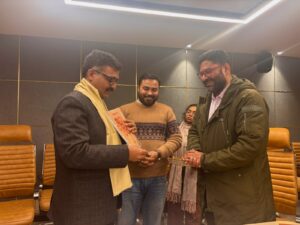
The session further discussed the challenges faced by BRICS, including internal diversity, geopolitical differences among member states, managing the China factor, and maintaining cohesion while navigating global power rivalries. Prof. Singh stressed the importance of moving beyond a “talk shop” approach and transforming BRICS into an action-oriented platform that delivers tangible outcomes for member nations and the broader Global South.
The interactive discussion that followed the lecture witnessed active participation from students, researchers, and policy enthusiasts, who engaged with the speaker on issues related to India’s strategic autonomy, global leadership responsibilities, and the future of multilateralism.
The programme concluded on a reflective note, reaffirming the importance of collective multilateral cooperation in shaping a resilient, democratic, and equitable world order. Through this initiative, Swadeshi Shodh Sansthan once again reinforced its commitment to promoting informed discourse on national and global issues while strengthening Bharat-centric perspectives in international affairs.