Small and Medium Enterprises, Startup Ecosystem
By Dr. Alok Singh, Recently, small and medium enterprises have received good support in the stock market. The primary market…



By Dr. Alok Singh, Recently, small and medium enterprises have received good support in the stock market. The primary market…

Punjab finds itself at a critical juncture, grappling with a complex array of socio-economic and political challenges that have shaped…

The All India Representative Assembly (AIRA) expresses serious concern over the Indian government’s indifferent behavior towards China’s multi-dimensional threats and…

Employment in India is a pivotal component of its economic structure, given its vast population exceeding 1.4 billion. This demographic…

The concept of agriculture in Swadeshi revolves around the principles of self-reliance, sustainability, and local empowerment within the agricultural sector.…

Bharat: A Torch Bearer at 2047 The 5000 years old value system as evolved and practiced in Bharat is more…
Delibrating Bharat’s Technology Paradigm Modern India has had a strong focus on science and technology, realizing that it is a…

The prevailing challenge in the world is security. No country is secured today. Every nation is redefining the meaning of…

New Economic Paradigm for 2047: Deliberation Human Centric Development A new economic paradigm should prioritize human-centric development alongside economic growth…

Population and Economic Development in India ‘India can reap the benefits of demographic change and achieve equitable and sustainable development…

India is a pivotal player in global energy markets, often relying on strategic trade partnerships to fuel its growing economy.…

1893 Chicago was the first voice to the world by a monk in saffron about what actually lies in the heart of Bharat. After this many addresses happened in this concern. But, RSS Sarsangchalak visit again rekindled the idea of Chicago and gave rise to the aroma of Bharatiya values for an Inclusive, and Sustainable…
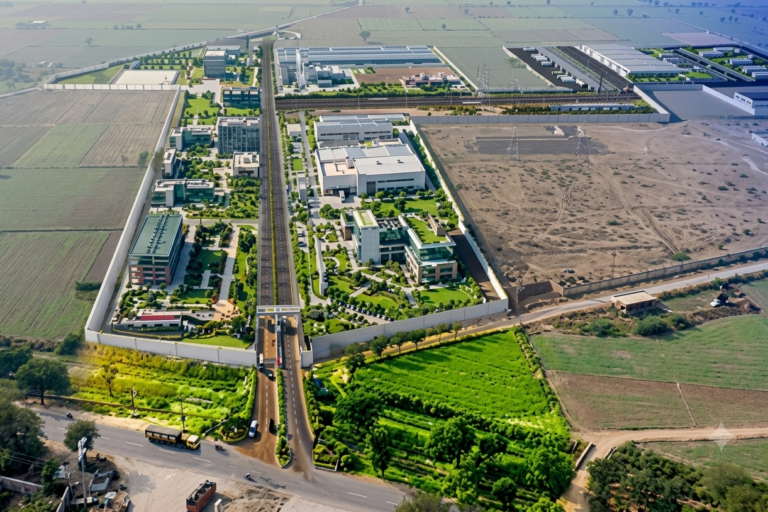
India’s Transition to an Industrial Economy in the “China+1” Era: Structural Bottlenecks, Localisation & MSME Integration By- Kartik Shyam Mogha, Research Associate & Manya Bhati, Research Intern Swadeshi Shodh Sansthan Throughout history, the locus of global production has continually shifted, fundamentally altering the balance of power and civilizational progress. For decades, the world…
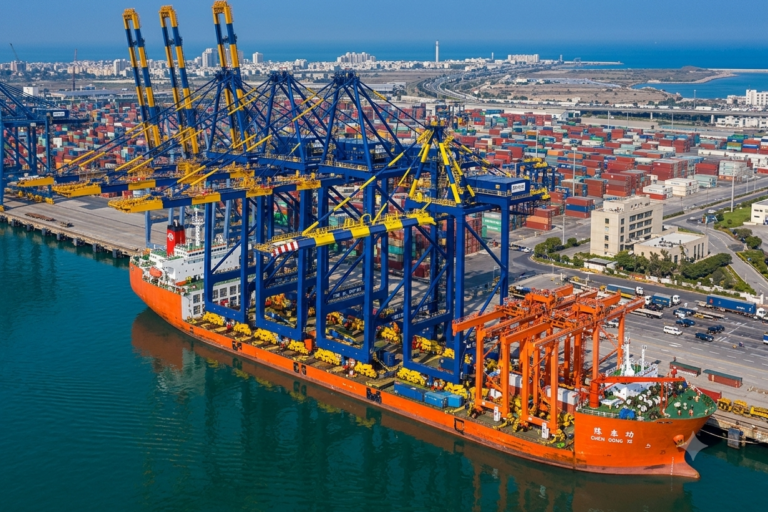
Introduction In Asian geopolitics, the growing Chinese presence in South Asian infrastructure is a defining feature of contemporary era. Dhaka’s government decision to give the modernization project of Mongla Port to Chinese firm illustrates strategic competition in the Bay of Bengal. Even though, under the Bangladesh’s national development agenda, this project is primarily presented as…
The 18th BRICS Summit in New Delhi on September 12-13, 2026, marks an important moment in the evolution of the emerging global order. Under Bharat’s presidency, the summit adopted the BRICS New Delhi Declaration, centred on “Building for Resilience, Innovation, Cooperation and Sustainability”. The declaration comes at a time when the international system is facing…
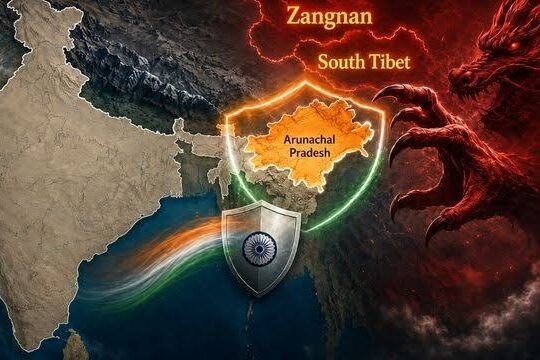
Cartographic Counter-Statecraft: India’s Arunachal Pradesh Mapping and China Introduction Maps are not merely geographical representations; in contested territories, they can become instruments of sovereignty, state authority and geopolitical communication. By formally identifying 27 locations and geographical features within Arunachal Pradesh, New Delhi is reinforcing the administrative and territorial narrative that these areas form an…
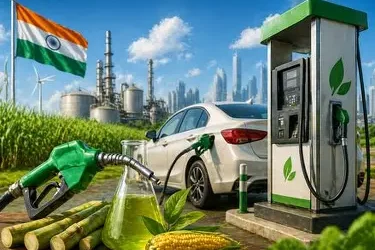
By Prachi The Elephant in the Room Scroll through any Indian automobile forum or neighbourhood WhatsApp group from the past few months, and a pattern emerges: bike owners, dads and working parents complaining about sluggish pickup. Car owners say their tanks empty faster than they used to. Mechanics are reporting a surge in fuel system…